Hunjan Hospital Ludhiana
Knee Replacement Surgery
Knee replacement at Hunjan Hospital, Ludhiana: total and partial replacement, robotic-arm-assisted (Mako) surgery, when it is considered, recovery and…
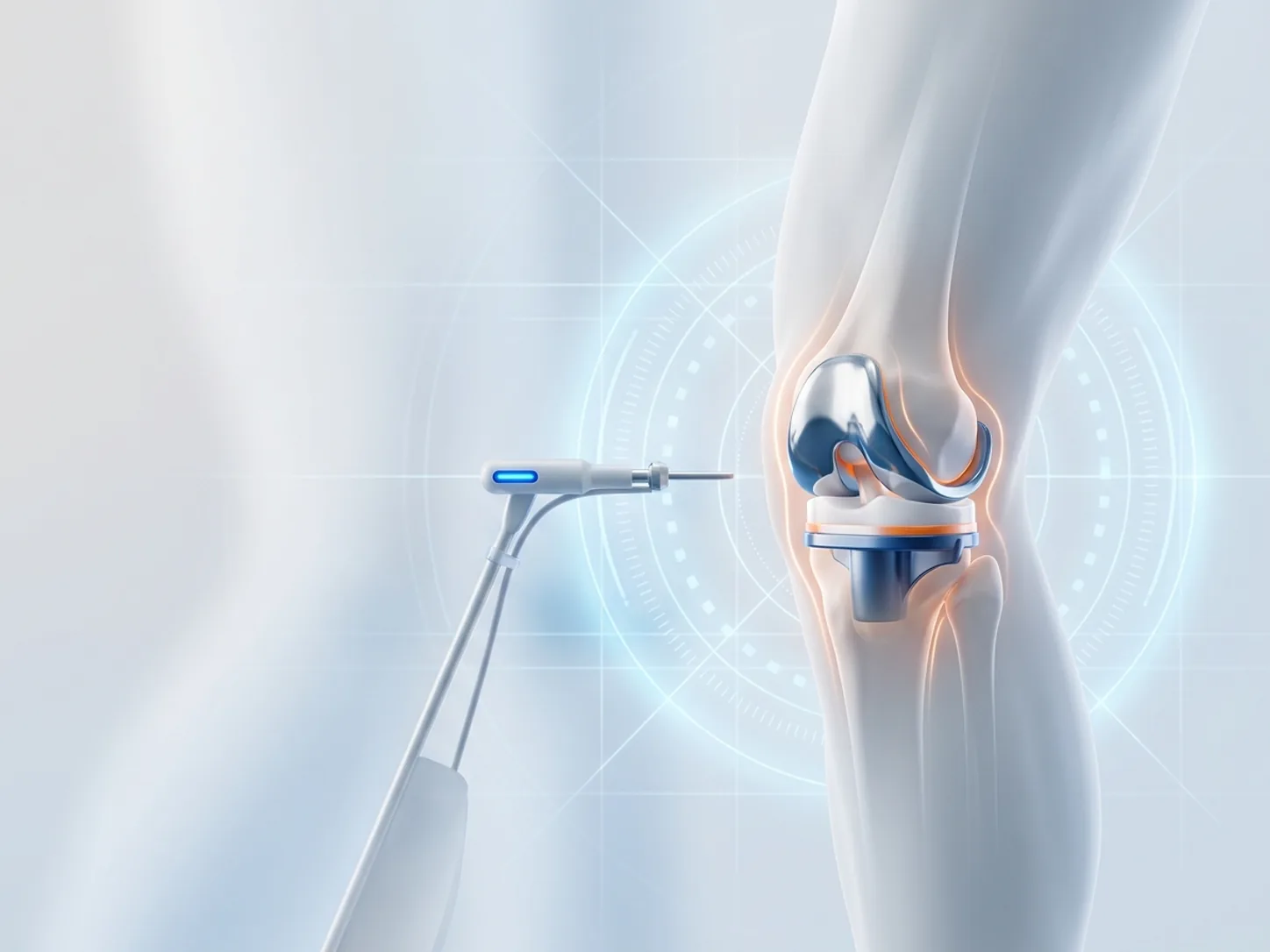
What is a knee replacement?
A knee replacement is an operation to replace the damaged surfaces of the knee joint with metal and plastic parts.[1] It is most often done for osteoarthritis, and sometimes for rheumatoid arthritis or arthritis that follows an injury.[1] It is considered when knee pain and stiffness have a big effect on your quality of life and other treatments have not helped enough.[2]
There are two main types, and robotic-arm assistance is one way of carrying them out:
- Total knee replacement: the worn surfaces of the thigh bone and shin bone are replaced, and often the underside of the kneecap as well.[1]
- Partial (unicompartmental) knee replacement: only the damaged part of the knee is resurfaced; healthy cartilage, bone and all the ligaments are kept.[3]
- Robotic-arm-assisted surgery: a CT-based 3D plan and a robotic arm help the surgeon prepare the bone. The Mako system can be used for both total and partial knee replacement.[4]
The hospital’s orthopaedic department uses the Mako robotic-arm system (made by Stryker). The robotic arm is a tool: your surgeon plans the operation and makes the bone cuts.[4] Whether a robotic-arm-assisted or a conventional operation suits you is decided with your surgeon after an assessment.
When is a knee replacement considered?
A knee replacement is usually considered when pain, stiffness, reduced movement or deformity of the knee is having a big effect on your quality of life, and non-surgical treatment has not helped enough or is not suitable.[2] There is no fixed age or weight limit; the decision is based on your symptoms, an examination, X-rays and your general health.[1,2] Reasons a surgeon may recommend surgery include the following.[1]
- Severe knee pain or stiffness that limits everyday activities
- Moderate or severe knee pain while resting, by day or at night
- Long-term swelling and inflammation of the knee that does not settle with rest or medicines
- A knee that is bowing inwards or outwards
- Little or no improvement with other treatments, such as exercise, weight management and medicines
Treatments to try before surgery
For knee osteoarthritis, NICE advises that the core treatments are therapeutic exercise and, where needed, weight management, together with clear information and support. Medicines and other treatments are used alongside these, not instead of them.[2]
- Exercise: a programme to strengthen the muscles around the knee and improve general fitness, which may be supervised by a physiotherapist. Pain may increase at first, but regular exercise reduces pain and improves function over time.[2]
- Weight management: if you are overweight, any weight loss is likely to help, and losing 10% of your body weight is likely to help more than losing 5%.[2]
- Medicines: an anti-inflammatory gel applied to the knee is usually tried first. Anti-inflammatory tablets may be considered if gels do not help, taking account of possible effects on the stomach, kidneys, liver and heart.[2]
- Steroid injection: an injection into the knee may be considered when other medicines have not helped or are unsuitable, or to support exercise. Relief is short term, usually about 2 to 10 weeks.[2]
- Walking aids and supports: a walking stick may help. Braces, insoles and supports are not routinely recommended, but may be used in particular situations, such as an unstable knee.[2]
NICE does not recommend hyaluronic acid (“gel”) injections, glucosamine, strong opioid painkillers, or arthroscopic washout or debridement (“clean-out”) of the knee for osteoarthritis.[2]
Partial or total knee replacement?
For people whose osteoarthritis is limited to the inner (medial) side of the knee, NICE advises offering a choice between partial and total knee replacement and discussing the benefits and risks of each.[8] Registry figures describe implants put in many years ago and are averages; they cannot predict exactly how long any one knee replacement will last.[6]
How the operation is done
Before surgery you will have a full assessment: questions about your health and how the knee affects you, an examination of the knee’s movement, stability, strength and alignment, and X-rays. Occasionally blood tests or an MRI scan are also needed.[1] You will be given advice on exercises to do before and after surgery, and on weight, diet and stopping smoking.[8]
The operation is done under a general anaesthetic (you are asleep) or a spinal, epidural or regional nerve block (you are awake but numb from the waist down), and usually takes 1 to 2 hours.[1] In a total knee replacement, the main steps are:
- Preparing the bone: damaged cartilage and a small amount of the bone underneath are removed from the ends of the thigh bone and shin bone.[1]
- Fixing the metal parts: metal implants recreate the joint surfaces and are fixed to the bone with or without bone cement.[1]
- Resurfacing the kneecap: the underside of the kneecap may be resurfaced with a plastic button.[1]
- Inserting a spacer: a plastic spacer between the metal parts gives a smooth gliding surface.[1]
In a partial knee replacement, metal and plastic parts are also used, but only the damaged compartment is resurfaced.[3]
What robotic-arm assistance does and does not change
With the Mako system, a CT scan is taken before the operation and used to build a 3D model of your knee. This model guides your surgeon in planning the position and alignment of the implants.[4] During the operation, the surgeon makes the bone cuts with a cutting tool on the robotic arm, which keeps the cutting within the planned boundaries. The robot does not operate on its own.[4]
What the research shows so far:
- More precise alignment: in studies, implants are positioned and aligned more precisely, with fewer alignment outliers, than with conventional instruments.[9,13]
- Similar results for patients so far: pain and function scores, complications and length of hospital stay have been broadly similar to conventional surgery; any differences have been small or uncertain.[9,13]
- Long-term benefit not yet known: it is not yet known whether more precise alignment leads to better long-term results or makes the implant last longer.[9,13]
- Practical differences: a planning CT scan is needed, which uses X-rays;[4,10] the operation may take longer, although this evidence is uncertain;[9] and the system can be used only with implants made by the same company.[4]
Most of this research is in total knee replacement, with less evidence for robotic-arm-assisted partial knee replacement. In the UK, NICE allows these systems to be used while more evidence is collected.[13]
Robotic-arm-assisted and conventional surgery compared
Robotic assistance is a different way of carrying out the same operation. Complication rates have been broadly similar, so the risks listed below apply to both methods.[13] Your surgeon will explain which approach is suitable for your knee.
Recovery: what to expect
Recovery is gradual and differs from person to person. These are typical ranges, not promises; your surgeon and physiotherapist will set goals with you.
- Day of surgery to day 1
Starting to move
Rehabilitation should start on the day of surgery if possible, and within 24 hours. Nurses and physiotherapists help you start walking, and you will have painkillers because the knee will be sore.[5,8]
- Usually 1 to 4 days
Going home
People usually leave hospital 1 to 4 days after the operation. You will usually be given compression stockings to help prevent blood clots.[5]
- Around 10 days
Wound review
Stitches or clips are usually removed after about 10 days. Keep doing your exercises; they help long-term strength and movement in the knee.[5]
- Around 6 weeks
Follow-up and walking
A follow-up appointment is usually about 6 weeks after surgery, and many people try walking without an aid around this time. NHS guidance advises waiting at least 6 weeks before driving after a total knee replacement, or 3 weeks after a partial one.[5]
- 6 to 12 weeks
Returning to work
Many people return to work after about 6 to 12 weeks, depending on their job. Avoid lifting or moving anything heavy for the first 3 months.[5]
- Several months or longer
Continuing improvement
Full recovery may take several months or longer; it is usually shorter after a partial knee replacement.[5] Low-impact activities such as walking and swimming are realistic goals, while high-impact activities such as running and jumping are generally not advised.[1]
Risks and limitations
Most people who have a knee replacement have no complications, and those that do occur are usually minor and treatable.[7] Like any operation, it carries risks, and your own risk depends on factors such as age, weight, smoking and other health conditions.[2]
- Blood clots in the leg veins (deep vein thrombosis) are among the more common complications. A clot can sometimes travel to the lungs (pulmonary embolism), which can be serious.[1,7]
- Infection of the wound or deep around the implant. Wound infections are usually treated with antibiotics; a deep infection may need further surgery. Serious complications such as joint infection occur in fewer than 2 in 100 people.[1,7]
- Stiffness or instability: some people have difficulty bending the knee, or the knee feels unstable when standing or walking. Physiotherapy may help.[7]
- Ongoing pain: a review of studies found that about 12 to 15 in 100 people report long-term pain up to 2 years after a total knee replacement, although the quality of the evidence is limited.[11]
- Injury to nerves, blood vessels or ligaments around the knee during surgery is uncommon.[1,7]
- Wear and loosening of the implant over time, which may mean another operation (revision) later.[1,7]
- Numbness and clicking: most people have some numbness in the skin around the scar, and many feel or hear clicking when bending or walking; the clicking often lessens over time.[1]
- Anaesthetic and general medical risks: major medical problems such as heart attack or stroke are uncommon.[1]
- Partial knee replacement may need further surgery later if arthritis develops in the parts of the knee that were not replaced.[3]
- Robotic-arm-assisted surgery has had complication rates broadly similar to conventional surgery, and needs a planning CT scan, which uses X-rays.[4,10,13]
Your surgeon and anaesthetist will discuss your individual risks, the alternatives and what to expect before you decide. You can take time to decide and ask for a second opinion.
When to get medical help after surgery
Contact the hospital or your doctor urgently if you notice any of the following after a knee replacement:
- Throbbing or cramping pain, tenderness, redness or new swelling in your calf, ankle or foot[1,7]
- A high temperature (fever) or chills[1,7]
- Oozing, pus or other discharge from the wound[1,7]
- Increasing redness, swelling or pain in the knee, during activity or at rest[1,7]
Get emergency help straight away (call 112 or go to the nearest emergency department) if you have sudden shortness of breath or chest pain, as these can be signs of a blood clot in the lungs.[1,7]
Preparing for your consultation
Your first visit is an assessment, not a commitment to surgery. Your surgeon should discuss the alternatives to a knee replacement, the possible benefits and risks of each option, and the chance of needing more surgery in the future.[8] It helps to bring:
- Recent X-rays, MRI or other scan reports, and notes from any earlier knee treatment or surgery
- A list of all the medicines you take, including blood thinners, diabetes medicines, and herbal or over-the-counter products
- Details of other health conditions, such as diabetes, high blood pressure, or heart, lung or kidney disease
- A note of how your knee affects daily life, such as walking distance, stairs, sleep and work
- The treatments you have already tried, such as exercise, physiotherapy, medicines or injections, and how much they helped
- Your questions, and a family member or friend if you would like support
If you decide to go ahead, you will have a pre-operative assessment, which may include blood tests and other checks, to make sure you are well enough for the operation.
Knee replacement: frequently asked questions
Charges and insurance
Treatment charges depend on clinical evaluation, the procedure, implant selection (where applicable), and room category. You can request an estimate after consultation before deciding on treatment. The hospital’s insurance desk assists with cashless pre-authorisation and reimbursement documentation for eligible policies — see the Insurance page.
Patient pathway
Knee Replacement Surgery treatment journey in Ludhiana
Patients receive a step-by-step clinical assessment focused on symptoms, diagnosis, treatment choices, recovery expectations, and follow-up care.
Consultation
The doctor reviews symptoms, history, current medicines, and previous reports.
Diagnosis
Imaging, lab tests, or specialist assessments may be advised when required.
Treatment plan
Options may include medication, therapy, minimally invasive care, surgery, or rehabilitation.
Recovery support
The team explains risks, recovery timelines, warning signs, and follow-up steps.
References
Sources are provided for general information; a qualified clinician can advise on your situation.
- Reference 2: Osteoarthritis in over 16s: diagnosis and management(opens in a new tab)
NICE, 2022nice.org.ukNG226
- Reference 3: Unicompartmental (Partial) Knee Replacement(opens in a new tab)
AAOS OrthoInfoorthoinfo.org
- Reference 4: 2 The technologies | Robot-assisted surgery for orthopaedic procedures: early value assessment(opens in a new tab)
NICE, 2025nice.org.ukHTG743 (formerly HTE22)
- Reference 6: How long does a knee replacement last? A systematic review and meta-analysis of case series and national registry reports with more than 15 years of follow-up(opens in a new tab)
The Lancet, 2019pmc.ncbi.nlm.nih.govdoi:10.1016/S0140-6736(18)32531-5; PMID 30782341
- Reference 8: Joint replacement (primary): hip, knee and shoulder(opens in a new tab)
NICE, 2020nice.org.ukNG157
- Reference 9: Clinical and radiological outcomes of robotic-assisted versus conventional total knee arthroplasty: a systematic review and meta-analysis of randomized controlled trials(opens in a new tab)
Acta Orthopaedica, 2023pmc.ncbi.nlm.nih.govdoi:10.2340/17453674.2023.9411; PMID 36805771
- Reference 11: What proportion of people have long-term pain after total hip or knee replacement? An update of a systematic review and meta-analysis(opens in a new tab)
BMJ Open, 2025bmjopen.bmj.comdoi:10.1136/bmjopen-2024-088975
- Reference 12: Bilateral total knee arthroplasty: Simultaneous or staged? A systematic review and meta-analysis(opens in a new tab)
Medicine (Baltimore), 2019pmc.ncbi.nlm.nih.govdoi:10.1097/MD.0000000000015931; PMID 31145362
- Reference 13: 3 Committee discussion | Robot-assisted surgery for orthopaedic procedures: early value assessment(opens in a new tab)
NICE, 2025nice.org.ukHTG743 (formerly HTE22)
This page was prepared with AI assistance and is awaiting review by a hospital clinician.
Book an appointment with our team