Hunjan Hospital Ludhiana
Trauma and Accident Surgery
What to do after an accident or injury, when to seek emergency care, how fractures are treated with or without surgery, typical healing times and risks.
What orthopaedic trauma care involves
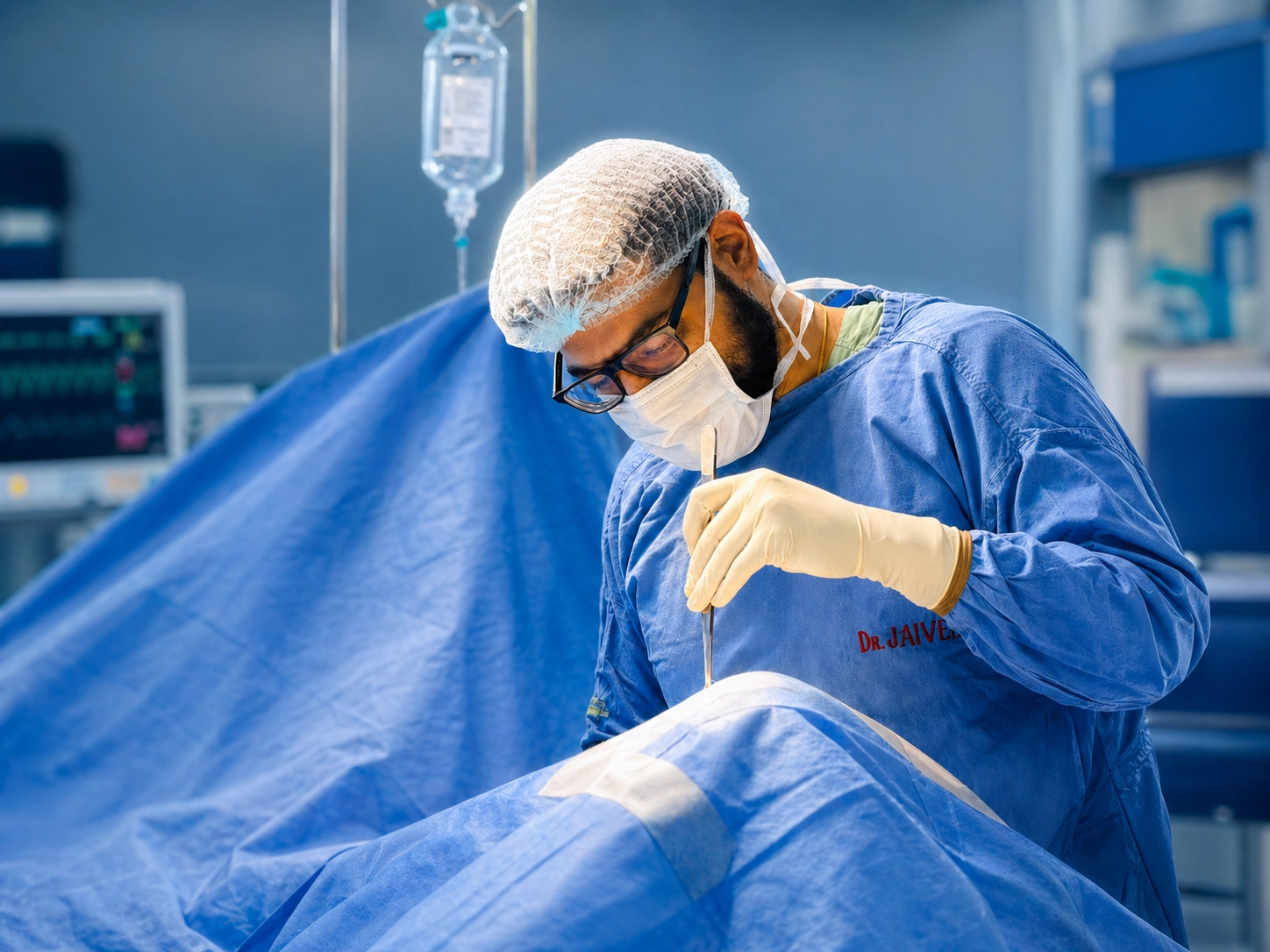
Orthopaedic trauma care treats injuries to bones, joints and the soft tissues around them after falls, road accidents, sports or work injuries. Many broken bones heal well once they have been put back into position and held in a cast; others need an operation to hold the bone in place while it heals.[4]
- Assessment of fractures, dislocations and soft-tissue injuries, with X-rays and other scans as needed[4]
- Non-surgical treatment with casts, splints or braces where suitable[4]
- Surgical fixation with plates, screws, rods (nails) or external frames when needed[4]
- Rehabilitation exercises to restore strength and movement[4]
In an emergency, call 112 or go to the nearest emergency department. 112 is India’s single emergency number for police, health, fire and other emergency services.[1]
What to do after an injury
While waiting for medical help:
- If a neck or back injury is possible, for example after a fall from a height, do not try to move the person until emergency services arrive[2]
- Keep the injured limb as still as possible, and support it with padding such as clothing or a blanket[2,3]
- Stop any bleeding by pressing on the wound with a clean cloth or dressing[2,3]
- Do not give the injured person anything to eat or drink, in case they need surgery[2,3]
If you can, bring a list of the injured person’s medicines and any previous X-rays or medical records.
When to seek emergency care
Call 112 or go to the nearest emergency department straight away if, after an injury:
- A limb is twisted or bent, or a joint has moved out of place[3,8]
- A bone is sticking out through the skin, or there is a bad cut or wound over the injury[3]
- There is very bad pain, or the person cannot walk or put weight on the limb[8]
- There is tingling or loss of feeling around the injury[8]
- There are signs of shock: cold, sweaty or pale skin, a fast or weak pulse, or fast, shallow breathing[3]
- There is severe muscle pain that is worse when the muscle is stretched, or a cast or bandage feels too tight; this can be compartment syndrome, which needs surgery as soon as possible[6]
- A neck or back injury is possible: severe neck or back pain, inability to move the neck, or loss of control of the limbs, bladder or bowels[2]
How fractures are treated
Treatment depends on which bone is broken, how it has broken, whether the skin is broken, and your age, health and activities.
- Cast or brace: a plaster or fibreglass cast is the most common fracture treatment. A functional cast or brace allows limited, controlled movement of nearby joints.[4]
- Traction: a gentle, steady pull that aligns the bone, usually as a temporary measure before surgery.[4]
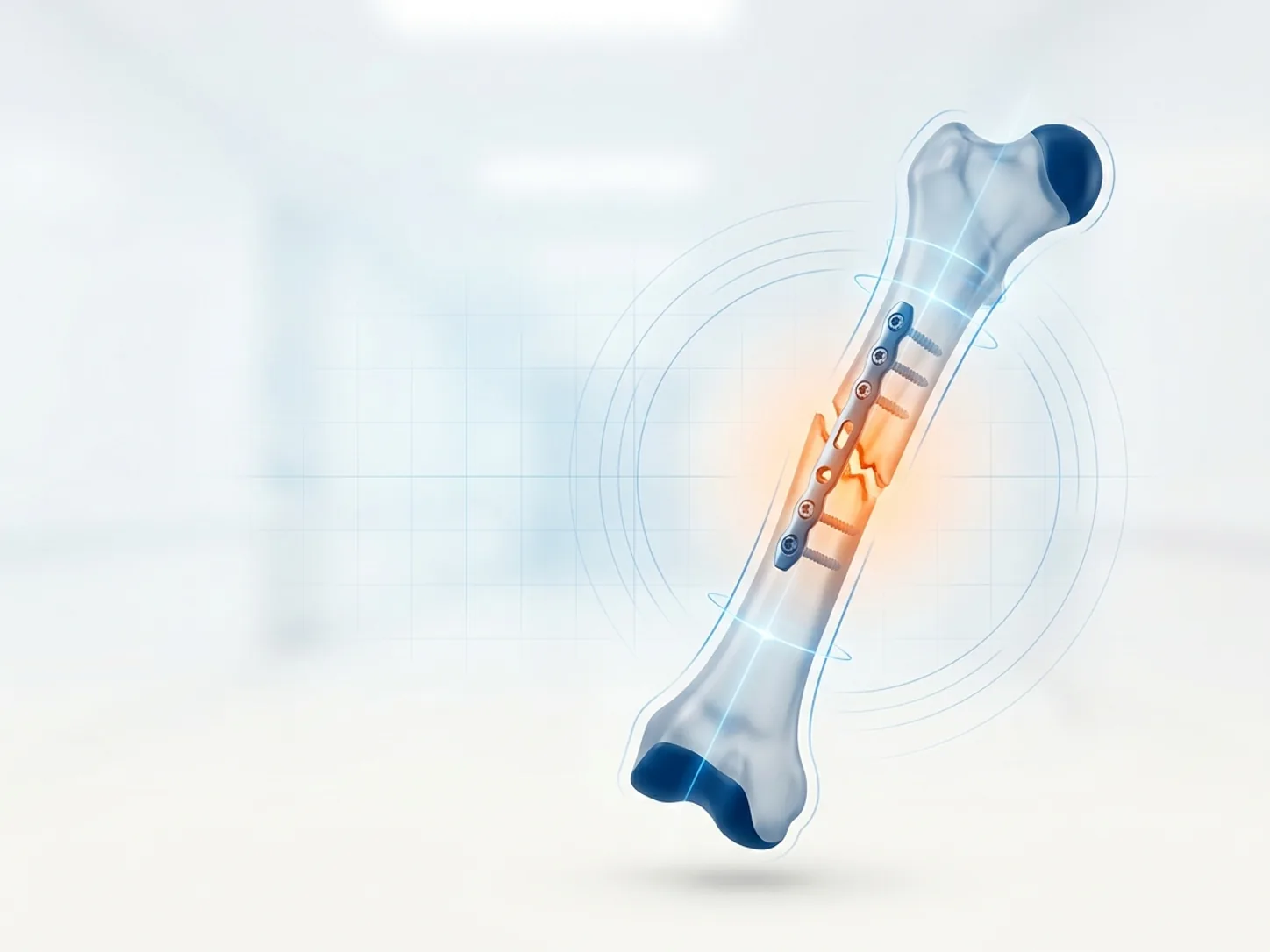
- Internal fixation: the bone fragments are put back into position and held with screws and metal plates, or with a metal rod (intramedullary nail) inside the bone.[4] Most thighbone (femur) shaft fractures are fixed with a nail, usually within 24 to 48 hours.[5]
- External fixation: pins or screws are placed in the bone above and below the break and connected to a frame outside the skin, either until surgery is possible or as the final treatment.[4]
In an open fracture, the bone breaks through the skin or a wound reaches the bone, so infection of the wound and bone can occur.[4] Antibiotics are started as soon as possible, and the wound and bone are cleaned during surgery.[5]
Typical healing and recovery
Healing time depends on the bone, the type of fracture, your age and health, and how closely you follow advice. Follow-up visits and X-rays guide each step.
- First days
Early movement
Pain is controlled and, where safe, movement of the limb starts early. Follow your surgeon’s instructions on how much weight you may put on it.[5]
- 3 to 4 weeks
Small bones
Some fractures, such as those in the fingers, take 3 to 4 weeks to heal.[4]
- 6 to 12 weeks
Many limb fractures
Many fractures take 6 to 8 weeks or longer; a broken leg usually takes 6 to 12 weeks to heal.[3,4]
- 3 to 6 months
Larger bones
Most thighbone shaft fractures take 3 to 6 months to heal completely, and longer if the fracture was open or in several pieces, or if the person uses tobacco.[5]
- Several months
Rehabilitation
Specific exercises help restore muscle strength, joint movement and flexibility. Physiotherapy may be needed for several months after a broken leg.[3,4]
Risks and limitations
Fractures and their treatment both carry risks. Your team will explain the ones that apply to your injury.
- Infection, particularly with open fractures and after surgery[4,5]
- Blood clots in the leg veins (deep vein thrombosis), which are more likely after surgery or when you cannot move around much[5,7]
- Injury to nerves or blood vessels[5]
- Compartment syndrome, a surgical emergency[5,6]
- Fat embolism, where fat from the bone marrow enters the bloodstream[5]
- The bone healing in a poor position, slowly (delayed union) or not at all (non-union)[5]
- Irritation from metal implants[5]
- Loss of muscle strength and joint movement during recovery[4]
Pain usually stops long before a fracture is strong enough for normal activity, so keep following your activity advice even when the pain has settled.[4] Get urgent help for increasing pain, a cast that feels too tight, or a painful, swollen calf; call 112 if you also feel short of breath or have chest pain.[1,6,7]
Frequently asked questions
Charges and insurance
Treatment charges depend on clinical evaluation, the procedure, implant selection (where applicable), and room category. You can request an estimate after consultation before deciding on treatment. The hospital’s insurance desk assists with cashless pre-authorisation and reimbursement documentation for eligible policies — see the Insurance page.
Patient pathway
Trauma and Accident Surgery treatment journey in Ludhiana
Patients receive a step-by-step clinical assessment focused on symptoms, diagnosis, treatment choices, recovery expectations, and follow-up care.
Consultation
The doctor reviews symptoms, history, current medicines, and previous reports.
Diagnosis
Imaging, lab tests, or specialist assessments may be advised when required.
Treatment plan
Options may include medication, therapy, minimally invasive care, surgery, or rehabilitation.
Recovery support
The team explains risks, recovery timelines, warning signs, and follow-up steps.
References
Sources are provided for general information; a qualified clinician can advise on your situation.
- Reference 1: Emergency Response Support System (ERSS)(opens in a new tab)
Ministry of Home Affairs, Government of Indiamha.gov.in
- Reference 5: Femur Shaft Fractures (Broken Thighbone)(opens in a new tab)
AAOS OrthoInfoorthoinfo.org
This page was prepared with AI assistance and is awaiting review by a hospital clinician.
Book an appointment with our team