Hunjan Hospital Ludhiana
Operation Theatre Training
Hunjan Super Speciality Hospital offers a structured Operation Theatre (OT) Training Programme in Ludhiana, Punjab, providing supervised exposure inside…

Operation Theatre Training Programme at Hunjan Hospital, Ludhiana
- Supervised scrub, scout and circulation roles in live OT settings
- Sterile field preparation and maintenance techniques
- Surgical instrument identification, handling and set-up
- Pre-operative patient reception and positioning protocols
- Post-operative OT turnover and biomedical waste management
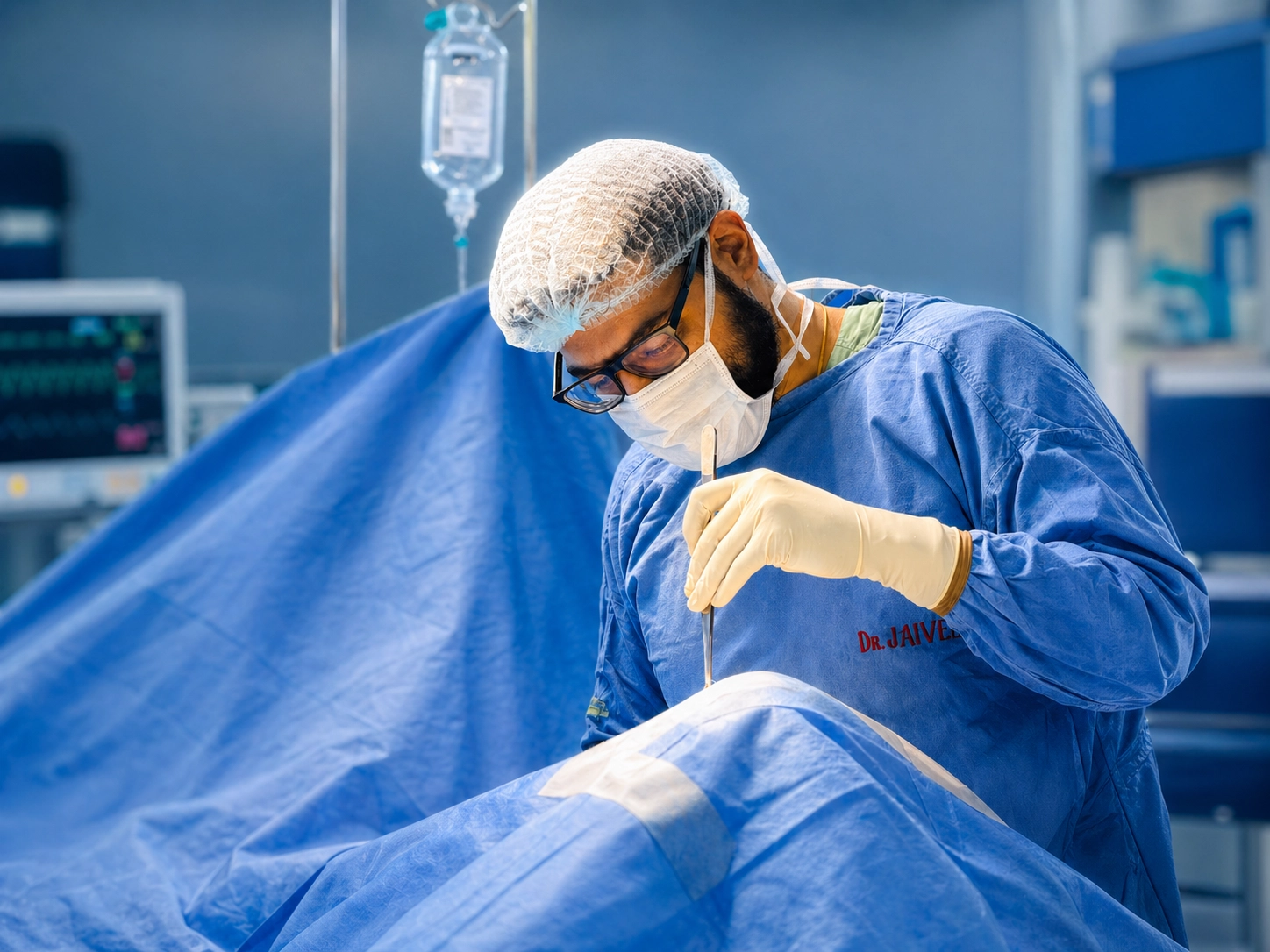
The programme is conducted inside Hunjan Hospital’s functioning operation theatres, which handle a wide variety of surgical procedures daily - giving trainees meaningful, real-context exposure that a standalone simulation centre cannot replicate.
What OT training at Hunjan Hospital covers
The training is structured to give participants a thorough grounding in OT environment management and perioperative support. Working alongside qualified OT nurses and technicians, trainees progress from observational to supervised participatory roles as their competence develops.
- OT zoning, air quality standards and infection control requirements
- Surgical scrub technique - hand-washing, gowning and gloving
- Instrument trolley layout and surgical set assembly for common procedures
- Counting protocols - instruments, swabs and needles before and after surgery
- Anaesthesia support awareness - monitoring, positioning and safety checks
- Laparoscopic and open surgery support - camera handling basics, port assistance
- Documentation: OT register, consent verification and implant records
Trainees also learn how to respond to common intra-operative situations under the guidance of senior OT staff, developing practical problem-solving skills in a supervised setting.
Who can apply for OT training at Hunjan Hospital?
OT training is open to students and graduates from nursing, paramedical and operation theatre technology backgrounds who need supervised clinical hours or practical skill development. Applicants should generally meet the following criteria:
- Enrolled in or graduate of an OT Technology, B.Sc. Nursing, GNM or paramedical programme
- Awareness of basic hospital infection control practices
- Willingness to adhere strictly to OT dress code and sterile technique requirements
- Availability for the complete scheduled rotation period
- Medical fitness to undertake sustained OT duties (standing, gowning, etc.)
OT training pathway at Hunjan Hospital
Trainees advance through a phased structure that builds knowledge and supervised practical skill before independent OT support roles are attempted.
- Phase 1
OT orientation and safety induction
Introduction to OT zones, infection control standards, NABH safety checklists and the roles of each team member in the surgical suite.
- Phase 2
Sterile technique and instrument familiarisation
Supervised practice in surgical hand scrub, gowning, gloving, instrument identification and trolley preparation for common surgical sets.
- Phase 3
Scout and circulation role practice
Trainees take the non-scrub (circulator/scout) role under supervision - managing supply, documentation, patient communication and OT environment during procedures.
- Phase 4
Scrub role exposure
Supervised scrub participation in lower-complexity procedures, focusing on correct instrument passing, swab counting and anticipating the surgical team’s needs.
- Phase 5
Review and competency sign-off
Performance review with the OT in-charge, completion of required log-book entries and structured feedback to guide further development.
Why choose Hunjan Hospital for OT training in Ludhiana?
Hunjan Super Speciality Hospital’s operation theatres handle orthopaedic, laparoscopic, general surgical, gynaecological and emergency cases, giving OT trainees exposure to a genuinely diverse caseload within a single campus in Ludhiana, Punjab.
- NABH pre-accredited hospital with standardised OT protocols
- Active, high-volume OT suite - orthopaedic, laparoscopic and general surgery cases
- Supervision by qualified OT nurses and experienced surgical staff
- Structured progression from observer to supervised participant
- Exposure to both open and minimally invasive surgical environments
- Centrally located in Ludhiana, accessible from across Punjab
OT training - frequently asked questions
Training pathway
Operation Theatre Training learning journey in Ludhiana
Students and trainees receive structured guidance focused on practical exposure, supervised learning, hospital workflows, communication, and professional readiness.
Orientation
Understand the training scope, eligibility, documents, timings, and expected learning outcomes.
Supervised exposure
Observe and participate in appropriate clinical or departmental workflows under guidance.
Skill building
Develop practical knowledge, safety awareness, communication habits, and patient-care discipline.
Next steps
Get guidance on continued learning, documentation, and future professional development.
We are waiting to serve with our speciality. Grab a free Consultation