Hunjan Hospital Ludhiana
Sports Injury Treatment
Common sports injuries such as sprains and ligament or meniscus tears: first aid, when to seek help, treatment options, return to sport and risks.

About sports injuries
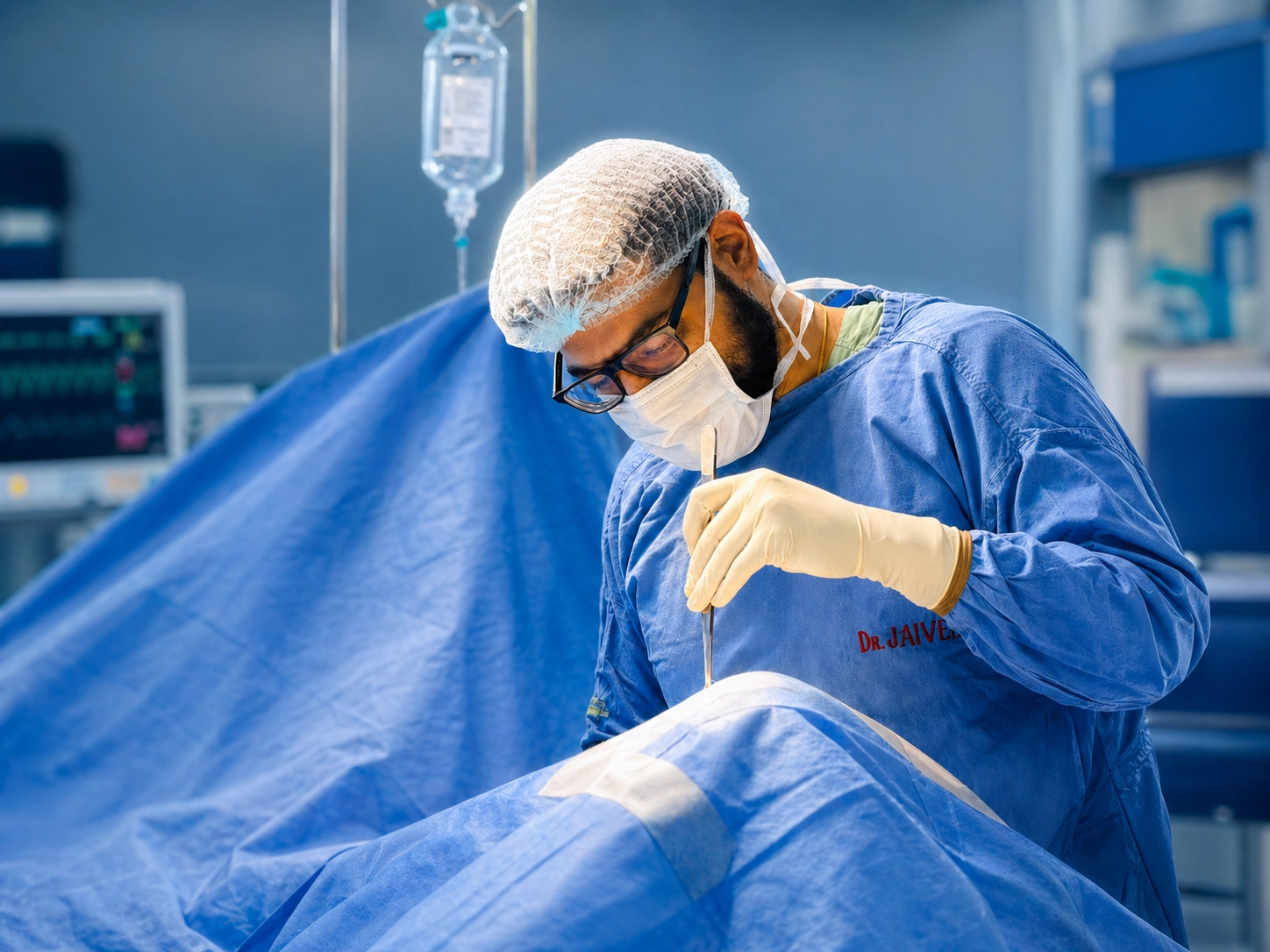
Sports injuries range from sprains and muscle strains to ligament tears, meniscus (knee cartilage) tears, dislocations and tendon ruptures. Most sprains and strains feel better within about 2 weeks with self-care.[1] Other injuries, such as a torn ACL or meniscus, may need specialist assessment, physiotherapy and, for some people, surgery.[2,8]
- Examination of the injured joint, with scans such as X-ray, ultrasound or MRI when needed
- Rehabilitation-based treatment with physiotherapy, and a brace where useful[4]
- Discussion of surgery, such as ACL reconstruction or meniscus repair, when it is likely to help[2,8]
- A graded plan for returning to training and sport
Treatment is planned around your injury, your sport and your goals. Surgery is one option, not the only one.
First aid for sprains and strains
For the first 2 to 3 days after a sprain or strain, PRICE therapy can help bring down swelling and support the injury.[1]
- Protection: protect the injury, for example with a support[1]
- Rest: stop exercise and try not to put weight on the injury[1]
- Ice: apply an ice pack wrapped in a towel for up to 20 minutes every 2 to 3 hours[1]
- Compression: wrap a bandage around the injury to support it during the day[1]
- Elevation: keep it raised on a pillow as much as possible[1]
Avoid heat, alcohol and massage for the first couple of days, and avoid strenuous exercise such as running for up to 8 weeks because of the risk of further damage. Severe sprains and strains can take months to get back to normal.[1]
When to seek emergency care
- You heard a crack when the injury happened[1]
- The injured part has changed shape or is pointing at an odd angle[1]
- The injured part is numb, tingling or has pins and needles[1]
- The skin around the injury looks blue or grey, or feels cold[1]
- Your shoulder looks out of place or you cannot move your arm; do not try to put it back yourself[10]
Injuries that need an orthopaedic assessment
Arrange a medical assessment if you have:
- A knee that gave way with a popping sound and then swelled, or that feels unstable (possible ACL injury)[2]
- A knee that catches, locks or gives way (possible meniscus tear)[8]
- Sudden severe pain and swelling near the heel, sometimes with a popping sound, and difficulty standing on your toes (possible Achilles tendon tear; seek care promptly)[9]
- A shoulder that has dislocated before or feels unstable[10]
- A sprain or strain that is getting worse or not improving with self-care[1]
ACL tear: rehabilitation first or early reconstruction?
Evidence note: in a randomised trial of 121 young, active adults with a recent ACL tear, rehabilitation with the option of later reconstruction gave similar results at 2 years to early reconstruction, and adverse events were common in both groups.[7] Returning to normal activities without treatment risks further damage to other structures in the knee.[2]
Typical recovery after ACL reconstruction
A general guide. Your physiotherapist will progress you based on strength and control, not on dates alone.
- Day of surgery
Going home
Most people can leave hospital on the same day as the operation; your team will advise you.[5]
- First weeks
Early rehabilitation
Regular physiotherapy continues for a few months. Use crutches until your physiotherapist says you can stop.[5]
- 4 to 6 weeks
Return to work
Many people return to work after about 4 to 6 weeks, depending on the type of work.[5]
- A few months
Most daily activities
Most activities are usually possible again within a few months.[5]
- Up to a year
Return to sport
It can take up to a year to be able to play sport again.[5]
Risks and limitations
Both surgical and non-surgical treatment of sports injuries have limitations. These are the main risks to discuss.
- ACL surgery can cause blood clots (DVT), wound infection, or damage to a blood vessel, nerve or ligament[6]
- After ACL surgery, the knee may be unstable, painful or stiff, and there may be problems where the graft was taken, such as around the kneecap[6]
- The new ACL graft can tear, which may need more surgery[6]
- If much of the meniscus has been removed, ongoing pain and osteoarthritis may develop later[8]
- Achilles tendon surgery can cause infection, nerve injury, wound breakdown, anaesthetic complications and blood clots, and the tendon can tear again after repair[9]
- After a shoulder dislocation, there is an increased risk of it happening again[10]
- Returning to strenuous exercise too early after a sprain or strain risks further damage[1]
Frequently asked questions
Patient pathway
Sports Injury Treatment treatment journey in Ludhiana
Patients receive a step-by-step clinical assessment focused on symptoms, diagnosis, treatment choices, recovery expectations, and follow-up care.
Consultation
The doctor reviews symptoms, history, current medicines, and previous reports.
Diagnosis
Imaging, lab tests, or specialist assessments may be advised when required.
Treatment plan
Options may include medication, therapy, minimally invasive care, surgery, or rehabilitation.
Recovery support
The team explains risks, recovery timelines, warning signs, and follow-up steps.
References
Sources are provided for general information; a qualified clinician can advise on your situation.
- Reference 2: Anterior Cruciate Ligament (ACL) Injuries(opens in a new tab)
AAOS OrthoInfoorthoinfo.org
- Reference 4: Alternatives to ACL (anterior cruciate ligament) surgery(opens in a new tab)
NHS, 2025nhs.uk
- Reference 5: Recovering from ACL (anterior cruciate ligament) surgery(opens in a new tab)
NHS, 2025nhs.uk
- Reference 6: Complications of ACL (anterior cruciate ligament) surgery(opens in a new tab)
NHS, 2025nhs.uk
- Reference 7: A randomized trial of treatment for acute anterior cruciate ligament tears(opens in a new tab)
The New England Journal of Medicine, 2010pubmed.ncbi.nlm.nih.govdoi:10.1056/NEJMoa0907797
- Reference 11: Emergency Response Support System (ERSS)(opens in a new tab)
Ministry of Home Affairs, Government of Indiamha.gov.in
This page was prepared with AI assistance and is awaiting review by a hospital clinician.
Book an appointment with our team