Why stair climbing brings out knee pain
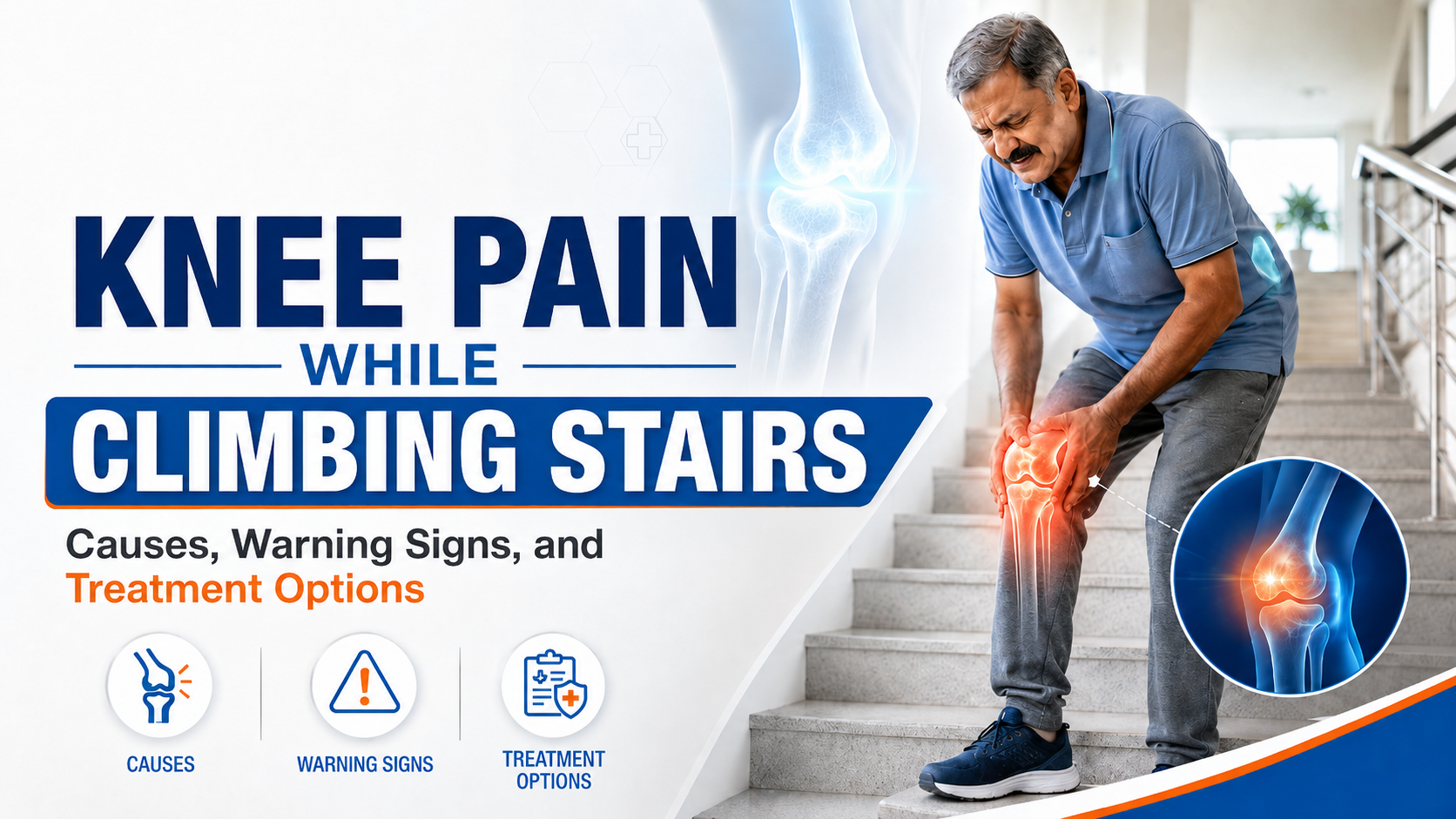
Many people notice their knee pain more while climbing stairs than while walking on flat ground. This is not random. Stair climbing puts higher load on the knee joint, especially on the front part of the knee and the joint between the kneecap and thigh bone.
When the knee bends deeply under load, any weakness, imbalance or joint damage becomes more noticeable. That is why stairs often become the first activity where people feel discomfort, even when normal walking feels manageable.
Common causes of knee pain while climbing stairs
This symptom can have multiple reasons. Identifying the correct cause is important because treatment depends on it.
- Early knee arthritis
Wear and tear in the joint can cause pain when the knee is under pressure, especially during bending movements like stairs. - Patellofemoral pain (front knee pain)
Pain around or behind the kneecap is common in younger individuals or those with muscle imbalance. It often worsens while climbing stairs or getting up from sitting. - Muscle weakness or imbalance
Weak thigh muscles can lead to poor knee support, increasing strain during stair movement. - Ligament or meniscus issues
Past injuries or minor tears can cause discomfort when the knee is loaded in a bent position. - Overuse or repetitive strain
Frequent stair use, prolonged standing or certain activities can irritate the knee joint over time. - Incorrect movement pattern
Subtle changes in the way a person walks or climbs stairs can increase pressure on certain parts of the knee.
Warning signs you should not ignore
Occasional discomfort may not be serious, but some signs indicate that the problem needs attention.
- Pain that keeps increasing over time
- Difficulty climbing stairs without support
- Knee stiffness after sitting or resting
- Swelling around the joint
- Clicking, grinding or catching sensation
- Feeling of instability or weakness in the knee
- Pain that starts affecting daily routine
These signs suggest that the issue may not resolve on its own.
What people often overlook
Knee pain during stairs is not always just a “joint problem.” In many cases, the root cause lies in muscle strength, joint alignment or movement habits.
- Strong muscles can reduce joint stress significantly
- Poor posture while climbing stairs increases load on the knee
- Ignoring early symptoms often leads to worsening of the condition
- Pain may start in one knee but later affect both if not managed
Many patients delay treatment because they can still walk normally on flat surfaces.
How it starts affecting everyday life
At first, people avoid stairs or take them slowly. Over time, the problem can begin to interfere with routine activities.
- Difficulty in climbing or descending stairs
- Avoiding physical activity
- Reduced confidence in movement
- Dependence on support like railings
- Limitation in travel or daily tasks
This gradual limitation often affects quality of life more than expected.
Treatment options based on the cause
Treatment is not the same for everyone. It depends on the underlying issue and the stage of the condition.
1. Early stage management
When the problem is mild, conservative care is usually effective.
- Physiotherapy to strengthen thigh and hip muscles
- Activity modification to reduce strain
- Weight management if needed
- Pain relief measures as advised
- Correcting posture and movement patterns
2. Moderate stage management
When symptoms persist or become more noticeable:
- Structured rehabilitation programs
- Advanced physiotherapy techniques
- Supportive treatments based on joint condition
- Monitoring progression of arthritis if present
3. Advanced stage management
If joint damage becomes significant and daily life is affected:
- Detailed clinical evaluation
- Planning for surgical options if required
- Knee replacement surgery in advanced arthritis cases
At this stage, the goal shifts from symptom control to restoring function.
Role of physiotherapy and rehabilitation
Many people underestimate how effective physiotherapy can be when done correctly.
- Improves muscle strength and joint stability
- Reduces load on the knee during movement
- Helps correct walking and stair-climbing pattern
- Supports recovery after injury or surgery
- Prevents further progression in early stages
Consistent rehabilitation often makes a significant difference.
How Hunjan Hospital approaches knee pain
At Hunjan Hospital, knee pain is not treated as a single symptom but as part of a larger functional problem. The focus is on identifying the cause and planning treatment accordingly.
The approach includes:
- Detailed assessment of knee condition
- Stage-based treatment planning
- Physiotherapy and rehabilitation support
- Advanced orthopedic care when required
- Robotic-assisted knee replacement for suitable cases
With 40 years of experience and 23,000+ joint replacements, the goal is to restore movement and improve long-term joint function.
When to consult a doctor
You should not wait until the pain becomes severe.
- Pain lasting more than a few weeks
- Increasing difficulty in climbing stairs
- Swelling or stiffness
- Reduced movement
- Pain affecting daily routine
Early consultation can prevent progression and simplify treatment.
Final thought
Knee pain while climbing stairs is often an early sign that something is not functioning properly in the joint. Ignoring it may lead to gradual worsening.
The right approach is to understand the cause, start early treatment and focus on improving movement, not just reducing pain. With proper care, many people can regain comfort and confidence in daily activities.
Medical Disclaimer: The information in this article is for educational purposes only and does not replace professional medical advice, diagnosis, or treatment. Always consult a qualified doctor for medical concerns or treatment decisions. Outcomes may vary from patient to patient.