Knee pain does not automatically mean you need knee replacement. Many people with knee osteoarthritis can manage symptoms for years with exercise, physiotherapy, weight management, medicines or other non-surgical treatments.
However, when arthritis becomes advanced, there may come a point when conservative treatment is no longer providing enough relief and everyday life is being significantly affected.
So, what are the signs that a patient should seriously discuss knee replacement with an orthopaedic surgeon?
Here are three important indicators.
Knee Pain Is Affecting Your Everyday Life
Occasional knee discomfort is very different from pain that starts controlling your routine.
You should consider an orthopaedic evaluation when knee pain or stiffness regularly interferes with activities such as:
- Walking even moderate distances
- Climbing or descending stairs
- Standing for extended periods
- Getting up from a chair
- Performing household or work-related activities
- Sleeping comfortably because of persistent knee pain
The key issue is not simply how the knee looks on an X-ray. What matters is how much the condition is affecting your function and quality of life.
NICE recommends considering referral for joint replacement when symptoms such as pain, stiffness, reduced function or progressive deformity substantially affect quality of life.
What This Means for Patients
If you have started avoiding activities you previously performed comfortably, reducing your walking because of pain, or planning your day around your knee, it may be time to have the condition reassessed.
That does not automatically mean surgery will be recommended, but it is a strong reason to discuss your treatment options.
Non-Surgical Treatments Are No Longer Giving Adequate Relief
Knee replacement is generally not the first treatment for knee osteoarthritis.
Depending on the patient’s condition, treatment may initially include therapeutic exercise, physiotherapy, weight management where appropriate, activity modification and selected pain-relieving treatments.
Regular therapeutic exercise is specifically recommended for people with osteoarthritis because it can help improve pain and physical function.
But there is an important distinction between:
“I still have some pain despite treatment”
and
“Appropriate treatment is no longer allowing me to function comfortably.”
If you have followed a suitable non-surgical treatment plan and continue to experience substantial pain, stiffness or disability, it may be reasonable to discuss surgical options.
Current NICE guidance recommends considering joint replacement when symptoms significantly affect quality of life and non-surgical management has become ineffective or unsuitable.
This is one of the strongest signs that a patient may be approaching the stage where knee replacement should be seriously considered.
Knee Stiffness, Deformity or Loss of Function Is Progressively Worsening
Advanced knee arthritis does not always present as pain alone.
Some patients gradually develop significant stiffness, difficulty fully bending or straightening the knee, reduced walking ability or changes in the alignment of the leg.
The knee may increasingly appear bow-legged or knock-kneed as arthritis progresses in certain parts of the joint.
When these changes begin affecting mobility and independence, simply continuing pain medication without reassessing the underlying joint problem may not be enough.
Progressive deformity, reduced function, pain and stiffness are among the symptoms considered when evaluating whether joint replacement referral may be appropriate.
Does Severe Arthritis on an X-Ray Automatically Mean Surgery?
No.
This is an important misconception.
A patient can have significant arthritis on an X-ray but relatively manageable symptoms, while another patient may have substantial limitations.
Current guidance recommends using clinical assessment rather than relying on a numerical severity score alone when deciding whether someone should be considered for joint replacement.
Therefore, the decision should consider:
Symptoms + examination + imaging + daily function + previous treatment + overall health.
Not the X-ray alone.
So, When Should You Seriously Consider Knee Replacement?
A discussion about knee replacement becomes more relevant when these three factors start occurring together:
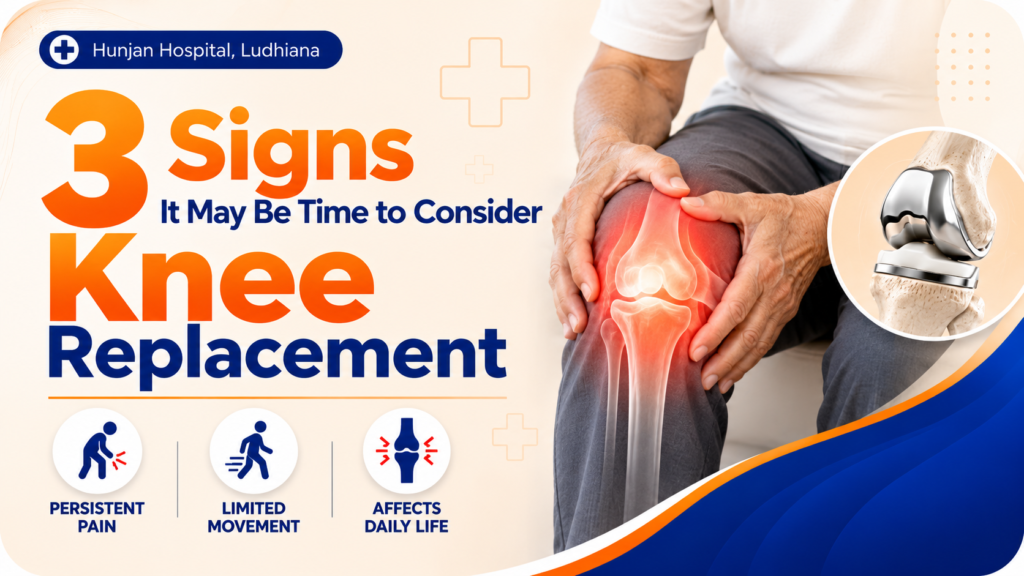
Persistent pain is significantly affecting daily life, appropriate non-surgical treatments are no longer giving adequate relief, and knee function or mobility continues to deteriorate.
Even then, seeing an orthopaedic surgeon does not mean you have committed to surgery.
The purpose of consultation is to understand:
- How advanced the arthritis is
- Whether other treatments are still reasonable
- Whether only one part or multiple parts of the knee are affected
- Whether partial or total knee replacement could be appropriate
- What benefits and risks apply to your individual condition
The aim should not be to undergo surgery as early as possible—or to delay it at any cost.
The aim is to choose the right treatment at the right stage.