Can a Problem in the Hip Really Cause Knee Pain?
When knee pain develops, most people naturally assume that something is wrong inside the knee. Conditions such as arthritis, ligament injuries, meniscus problems and inflammation are common causes of knee pain.
However, the area where pain is felt is not always the area where the problem begins.
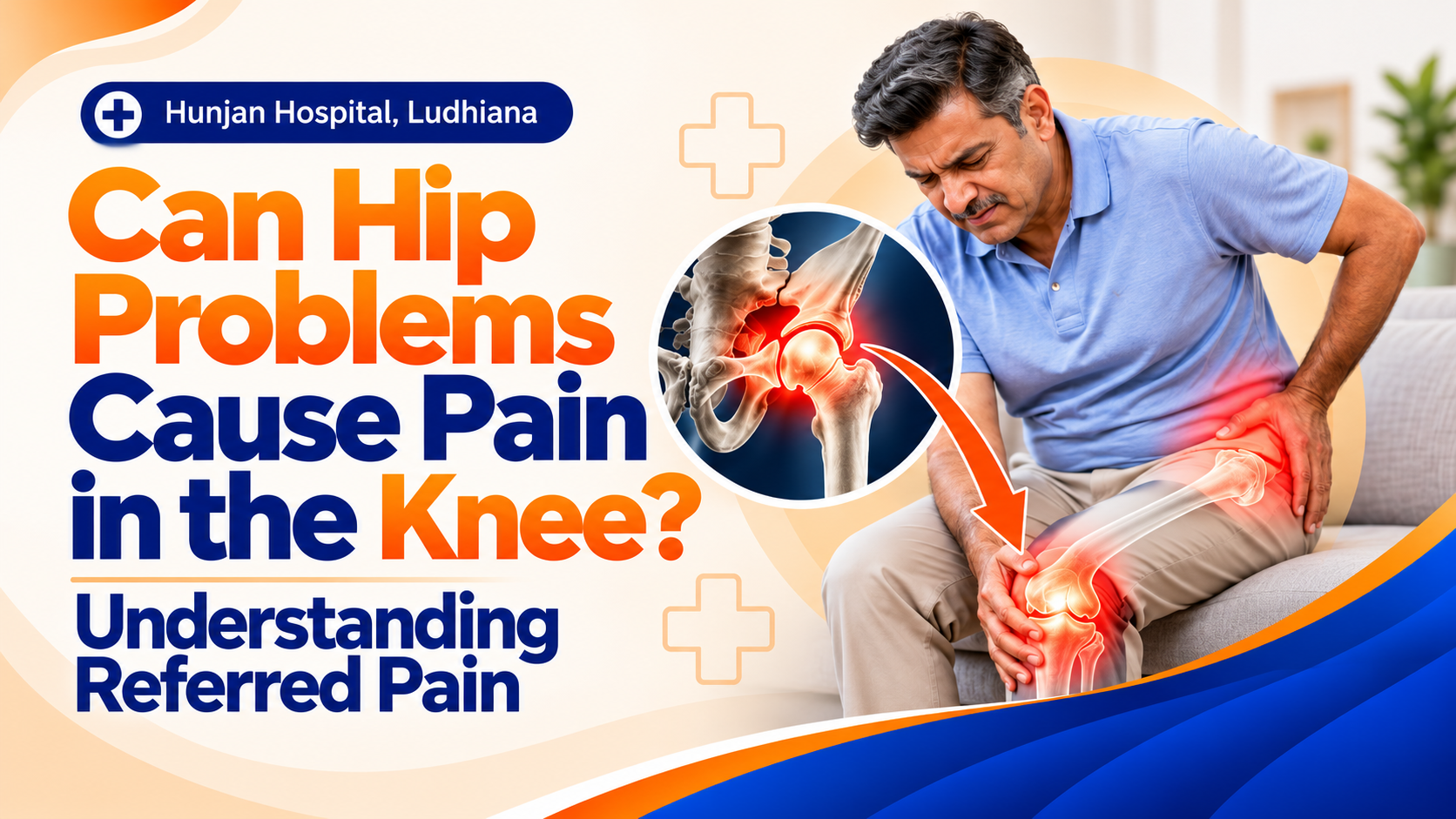
In some people, hip problems can cause knee pain because discomfort arising from the hip may be perceived farther down the thigh or around the knee. This is known as referred pain.
Hip osteoarthritis, for example, commonly causes pain and stiffness around the hip and groin, but pain may also radiate into the thigh or knee.
What Is Referred Pain?
Referred pain occurs when discomfort originating in one part of the body is experienced in another area.
The hip, thigh and knee are connected not only mechanically but also through overlapping nerve pathways. Because of this relationship, the nervous system may sometimes interpret pain arising from the hip as referred knee pain.
This can make diagnosis more complicated, particularly when the patient mainly complains of knee pain and has only mild or less obvious symptoms around the hip.
Which Hip Conditions May Cause Pain Around the Knee?
One of the conditions doctors may consider is hip osteoarthritis.
Osteoarthritis can gradually affect the cartilage and other structures of the hip joint, producing stiffness, reduced movement and pain. Although groin discomfort is common, hip arthritis knee pain may occur when symptoms radiate toward the thigh and knee.
Other hip and surrounding musculoskeletal conditions may also produce pain patterns extending into the leg. For this reason, persistent knee pain should not automatically be assumed to originate from the knee alone.
A comprehensive orthopaedic assessment at Hunjan Hospital can help assess the hip, knee and surrounding structures when clinically appropriate.
Signs That the Hip May Be Contributing to Knee Pain
The hip may deserve closer assessment when knee pain occurs along with:
- Pain around the groin or upper thigh
- Hip stiffness
- Reduced hip movement
- Difficulty bending to put on shoes or socks
- Difficulty getting in and out of a car
- Pain while standing or walking
- Limping or changes in walking pattern
- Knee pain without an obvious local knee cause
- Pain involving both the hip and knee
These symptoms do not automatically confirm that the hip is causing the knee pain. They simply indicate that examination of the hip may be useful.
Why Examining Only the Knee May Not Always Be Enough
The hip and knee work together during standing, walking, stair climbing and many everyday movements.
A restriction or painful problem in one joint may influence the way the entire lower limb functions.
When symptoms suggest referred pain from the hip, an orthopaedic doctor may assess:
- Hip range of motion
- Knee movement
- Muscle strength
- Joint tenderness
- Walking pattern
- Limb alignment
- Neurological symptoms where relevant
Depending on the findings, X-rays or other investigations may be recommended.
Hunjan Hospital’s orthopaedic specialists in Ludhiana assess bone, joint, ligament, tendon and other musculoskeletal conditions and may recommend imaging or rehabilitation where clinically required.
Does Hip-Related Knee Pain Mean Surgery Is Required?
No.
Finding that knee pain may originate from a hip condition does not automatically mean surgery is required.
Treatment depends on factors including:
- The underlying diagnosis
- Severity of pain
- Degree of joint damage
- Mobility
- Impact on daily life
- Patient age and general health
- Response to previous treatment
Depending on the cause, treatment may include activity modification, appropriate medication, physiotherapy, strengthening and mobility exercises or other non-surgical approaches.
Surgical treatment is considered only when clinically appropriate after individual assessment.
Can Physiotherapy Help?
Physiotherapy may be useful for selected patients experiencing hip pain and knee pain, particularly when weakness, reduced joint movement or altered walking mechanics are contributing to symptoms.
Hunjan Hospital provides physiotherapy and rehabilitation services focused on restoring movement, strength, balance and confidence after injury, surgery and musculoskeletal problems.
The rehabilitation programme should always be based on the underlying diagnosis rather than simply treating the location where pain is felt.
When Should You Consider an Orthopaedic Assessment?
An assessment may be appropriate if:
- Knee pain persists or repeatedly returns
- Walking is becoming difficult
- Hip or groin pain is also present
- Joint movement is becoming restricted
- Pain interferes with sleep or daily activity
- There is unexplained weakness or limping
- Previous treatment directed only at the knee has not helped as expected
Severe pain after an injury, inability to bear weight, significant deformity or sudden loss of movement should receive prompt medical attention.
The Important Message
Knee pain does not always mean that the knee itself is the source of the problem.
In some cases, hip joint problems can produce referred pain that is felt around the thigh or knee. Looking at the hip, knee and overall movement pattern can therefore be important when determining the actual cause.
An accurate diagnosis allows treatment to focus on the underlying problem rather than simply the location where pain is experienced.
Consultation & Registration
+91 85560 24365
Hunjan Hospital
111 Kochar Market Rd, South Model Gram, Ludhiana, Punjab 141002
Joint Replacement Package Information
₹90,000 is a starting package. Final cost may vary depending on medical evaluation, implant selection, patient condition and treatment requirements. T&C apply. Individual results may vary.
Medical Disclaimer
This article is intended for general educational purposes only and should not be considered a diagnosis or a substitute for personalised medical advice. Hip, thigh and knee pain can have several possible causes. Diagnosis and treatment should be based on individual symptoms, clinical examination and appropriate investigations performed or recommended by a qualified healthcare professional.