Why Do Muscles Become Weak During Rest?
After a fracture, surgery or significant orthopaedic injury, protecting the affected part of the body may be necessary for proper healing.
Depending on the condition, this may involve:
- A cast
- A brace or splint
- Restricted weight-bearing
- Reduced walking
- Bed rest
- Temporary limitation of joint movement
Although this protection may be medically necessary, muscles receive much less stimulation than they normally would.
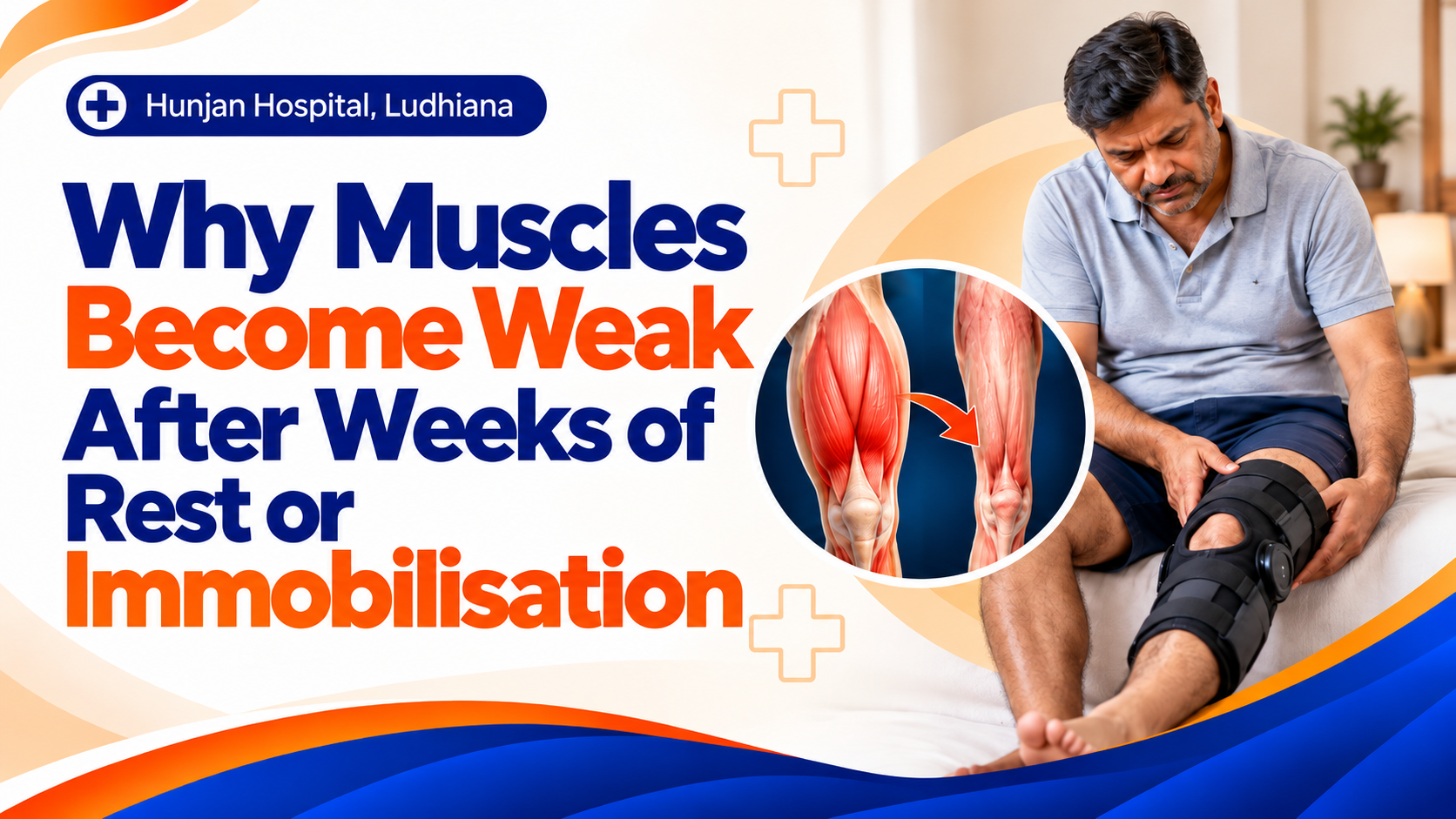
When muscles are not used regularly, they begin to adapt to the lower level of physical demand. This can lead to muscle weakness after immobilisation and a reduction in muscle size known as disuse muscle atrophy.
Research in humans shows that periods of skeletal muscle disuse can result in relatively rapid reductions in muscle mass and strength.
What Happens to the Muscles During Immobilisation?
Muscles normally maintain their strength through regular loading and movement.
Activities such as walking, standing, climbing stairs and getting up from a chair repeatedly activate the muscles of the legs.
When this activity decreases substantially, several changes can occur.
Reduced Muscle Size
The balance between muscle protein production and breakdown changes during prolonged disuse. Over time, muscle fibres may become smaller, contributing to muscle loss after injury.
Reduced Strength
Strength may decline significantly during immobilisation.
Importantly, weakness does not result only from smaller muscles. Changes in the nervous system’s ability to activate muscles can also contribute, which is one reason muscle strength may decline faster than muscle size.
Reduced Endurance
After several weeks of limited activity, patients may notice that everyday tasks make their muscles tired more easily than before.
Why Does the Limb Look Smaller After a Cast Is Removed?
Patients are sometimes surprised when a leg or arm looks noticeably thinner after being in a cast.
This difference is often the result of disuse muscle atrophy.
Because the muscles underneath the cast have been doing much less work, they may temporarily lose size and strength.
The degree of muscle loss varies depending on:
- Duration of immobilisation
- Age
- General health
- Previous fitness level
- Type of injury
- Amount of permitted movement
- Muscle group involved
Studies examining single-leg immobilisation have demonstrated reductions in both muscle size and strength, with greater changes occurring as the duration of disuse increases.
Why Can Joints Feel Stiff as Well?
After weeks of restricted movement, weakness may not be the only problem.
Patients may also experience:
- Joint stiffness
- Reduced range of motion
- Poor balance
- Difficulty walking
- Reduced coordination
- Fear of putting weight on the limb
- Reduced confidence during movement
The original injury, swelling, pain and period of immobilisation may all contribute.
This is why rehabilitation after a fracture or orthopaedic procedure often involves more than simply strengthening the muscles.
What Is the Role of Physiotherapy After Immobilisation?
Once the treating doctor confirms that movement and loading are medically appropriate, structured rehabilitation can help restore function.
Hunjan Hospital’s physiotherapy services include rehabilitation aimed at rebuilding movement, strength and balance following injury and surgery.
Depending on the patient’s condition, physiotherapy after immobilisation may include:
- Gradual range-of-motion exercises
- Progressive muscle strengthening
- Balance exercises
- Walking and gait training
- Functional movements
- Mobility exercises
- Gradual return to normal activities
Exercises should be selected according to the injury and stage of healing.
Why Should Rehabilitation Be Gradual?
A common mistake is assuming that normal activity can immediately restart once a cast or brace is removed.
Although the bone or injured structure may have progressed through healing, muscles and joints may still need time to regain normal function.
Increasing activity too quickly may cause unnecessary pain or irritation. On the other hand, remaining inactive longer than medically necessary can contribute to continuing weakness and stiffness.
For patients recovering after surgery or fracture fixation, post-operative rehabilitation at Hunjan Hospital can provide a structured progression based on recovery needs.
Can Muscle Strength Return After Immobilisation?
In many patients, muscle strength can improve substantially with appropriate rehabilitation and progressive activity.
Recovery time is not identical for everyone.
A younger patient recovering from a short period of immobilisation may progress differently from an older patient who has experienced a major fracture, prolonged hospital stay or several weeks of restricted weight-bearing.
Research indicates that exercise can help counteract or improve disuse-related reductions in muscle strength and mass, although the ideal rehabilitation programme depends on the clinical circumstances.
What Can Patients Do During Recovery?
Patients should follow instructions provided by their orthopaedic and physiotherapy team.
Depending on the injury, recovery may involve:
- Completing prescribed exercises regularly
- Gradually increasing activity
- Following weight-bearing restrictions
- Maintaining adequate nutrition
- Reporting unusual pain or swelling
- Attending rehabilitation follow-ups
- Avoiding unapproved high-impact activity
A personalised approach is particularly important after fractures and surgery.
The Important Message
Muscle weakness after immobilisation is a recognised consequence of reduced muscle use.
Even a relatively short period of significantly reduced activity can affect strength, and longer periods may also contribute to loss of muscle size and physical conditioning.
Appropriate orthopaedic rehabilitation and physiotherapy can help patients gradually restore movement, strength, balance and confidence once the injured area is ready for progressive activity.
Consultation & Registration
+91 85560 24365
Hunjan Hospital
111 Kochar Market Rd, South Model Gram, Ludhiana, Punjab 141002
Joint Replacement Package Information
₹90,000 is a starting package. Final cost may vary depending on medical evaluation, implant selection, patient condition and treatment requirements. T&C apply. Individual results may vary.
Medical Disclaimer
This article is for general educational purposes only and should not replace individual medical or physiotherapy advice. The appropriate duration of immobilisation, weight-bearing status and rehabilitation programme vary according to the injury, surgical procedure and patient’s health. Exercises and activity should be started or progressed according to guidance from an appropriately qualified healthcare professional.