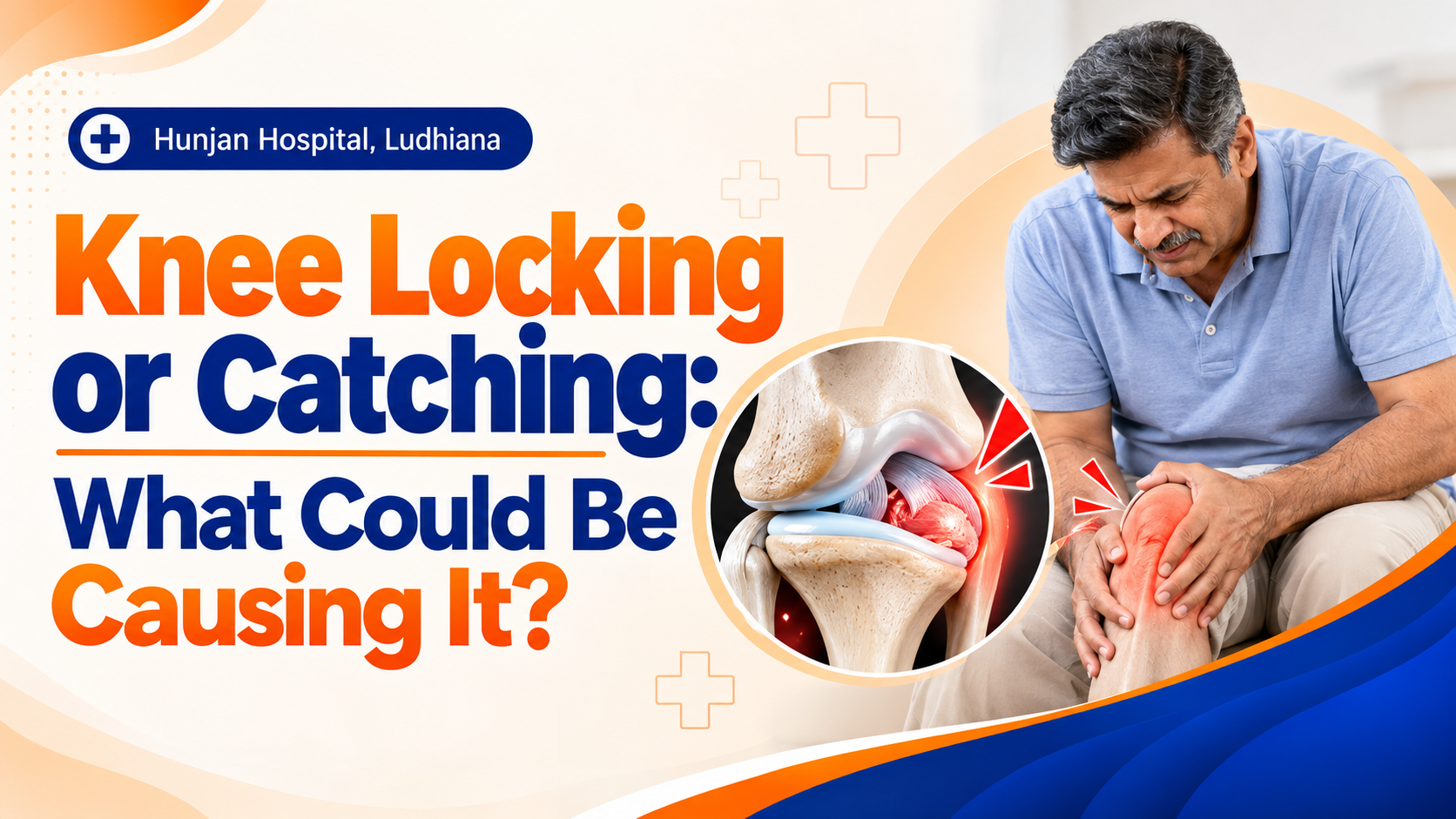
A knee that suddenly catches, clicks or becomes difficult to straighten can be concerning. Some people describe a brief catching sensation during movement, while others experience true locking, where the knee physically becomes stuck and cannot fully bend or straighten.
These symptoms should not automatically be attributed to arthritis. Several structures within the knee can produce mechanical symptoms, and treatment depends on the underlying cause.
Meniscus Tears
The menisci are cartilage structures positioned between the thighbone and shinbone that help distribute load and support knee stability.
A meniscus can tear following a twisting injury, but degenerative tears can also develop gradually as the tissue changes with age.
Meniscus tears may cause pain, swelling, clicking, catching, difficulty moving the knee or a feeling that the knee is giving way. A displaced tear can occasionally cause true mechanical locking.
Loose Bodies Inside the Knee
Small fragments of cartilage or bone can sometimes move freely within the joint. These are commonly described as loose bodies.
Depending on their size and location, they may intermittently become trapped between joint surfaces and cause sudden catching or locking.
Loose bodies can occur following cartilage injury, osteoarthritis or certain other joint conditions.
Cartilage Damage
Articular cartilage covers the ends of the bones and allows smooth joint movement.
Damage to a localised area can cause pain, stiffness and reduced mobility. Cartilage abnormalities may also contribute to mechanical symptoms in selected patients.
Knee Osteoarthritis
Osteoarthritis can produce irregular joint surfaces, cartilage loss, osteophytes, stiffness and inflammation.
Some patients with arthritis describe grinding, clicking or catching sensations. However, these symptoms do not automatically mean surgery is required.
Treatment decisions should be based primarily on pain, function, physical examination and the severity of the overall condition rather than the presence of joint sounds alone.
Is Clicking Always a Problem?
No.
Many knees click or make occasional noises without pain, swelling, locking or functional difficulty. Joint sounds alone do not necessarily indicate significant damage.
Medical evaluation becomes more important when clicking or catching is associated with:
- Persistent pain
- Repeated swelling
- A recent twisting injury
- Giving way
- Loss of movement
- Difficulty bearing weight
- Recurrent episodes of locking
What Is True Knee Locking?
True mechanical locking generally means the knee becomes physically stuck and the patient cannot move it through its normal range.
This is different from a knee that temporarily feels difficult to move because of pain or muscle spasm.
A knee that becomes genuinely locked particularly after an injury should be assessed promptly. Meniscal pathology is one potential cause, although other mechanical conditions can produce similar symptoms.
How Is the Cause Diagnosed?
Assessment usually starts with a detailed history.
The doctor may ask whether the problem started after an injury, whether swelling appeared immediately or later, where the pain is located and whether the knee physically becomes stuck.
Clinical examination evaluates range of motion, joint-line tenderness, stability and other signs.
X-rays may be used to assess bone and arthritic changes. When a meniscal tear, cartilage injury or another soft-tissue problem is suspected, an MRI may be appropriate in selected cases. MRI is commonly used in the evaluation of meniscal injuries.
Does Knee Locking Always Require Surgery?
No.
Many meniscal injuries can initially be treated without surgery, particularly when symptoms are manageable and there is no persistent mechanical block. Physiotherapy, activity modification and appropriate pain management may be considered depending on the diagnosis.
Surgery may be considered in selected cases when there is a repairable traumatic tear, a displaced fragment causing mechanical obstruction or persistent symptoms despite appropriate non-surgical treatment.
For established osteoarthritis, arthroscopic washing or debridement is not routinely recommended simply as a treatment for arthritis.
The Important Message
“Knee locking” is a symptom rather than a diagnosis. It can result from meniscus damage, cartilage problems, loose fragments, arthritis or other knee conditions.
Repeated catching, significant swelling, inability to fully straighten the knee or true locking should not be ignored. Identifying the actual cause allows treatment to be selected according to the condition rather than treating the symptom alone.
Consultation & Registration
+91 85560 24365
Hunjan Hospital
111 Kochar Market Rd, South Model Gram, Ludhiana, Punjab 141002
Joint Replacement Package Information
₹90,000 is a starting package. Final cost may vary depending on medical evaluation, implant selection, patient condition and treatment requirements. T&C apply. Individual results may vary.
Medical Disclaimer
This article is for general educational purposes only and does not replace a professional diagnosis or personalised treatment plan. Knee locking and catching can have several causes, and appropriate treatment depends on examination and investigations. Seek prompt medical care if the knee becomes completely locked, is severely painful after an injury, cannot bear weight, is significantly swollen or is associated with numbness or deformity.