Hip pain can gradually affect walking, climbing stairs, getting in and out of a chair, sleeping comfortably and performing everyday activities. In many patients, hip problems can initially be managed with medicines, physiotherapy, activity modification, weight management or other non-surgical treatments depending on the underlying condition.
However, when the hip joint becomes severely damaged and pain or loss of mobility continues despite appropriate treatment, hip replacement surgery may be considered after evaluation by an orthopaedic surgeon.
What Is Hip Replacement Surgery?
Hip replacement, also known as hip arthroplasty, is a surgical procedure in which damaged parts of the hip joint are replaced with artificial components.
The hip is a ball-and-socket joint. The ball at the upper end of the thigh bone, called the femoral head, fits into a socket in the pelvis called the acetabulum.
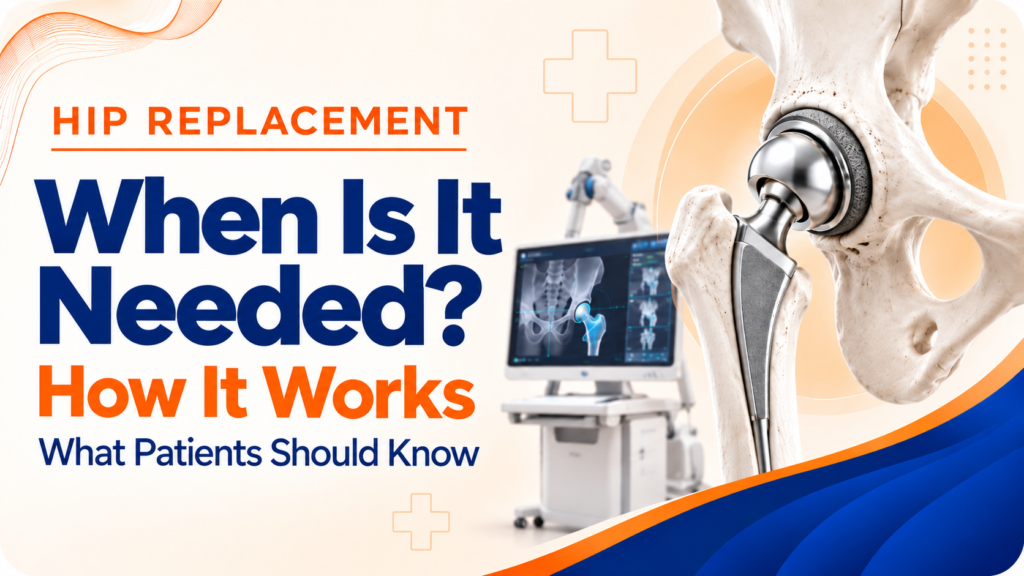
During a total hip replacement, the damaged femoral head is replaced with an artificial ball attached to a stem placed inside the thigh bone. The damaged surface of the hip socket is also replaced with an artificial cup.
The purpose of surgery is to reduce pain and improve joint function and mobility when the natural joint has become significantly damaged.
When May Hip Replacement Be Needed?
Hip replacement is most commonly considered when joint damage causes persistent pain, stiffness or reduced mobility that significantly affects daily life.
Conditions that may eventually lead to hip replacement include:
- Osteoarthritis, where the protective cartilage of the hip gradually wears down.
- Rheumatoid arthritis and other inflammatory joint conditions that may damage cartilage and bone.
- Avascular necrosis, in which reduced blood supply causes damage or collapse of the femoral head.
- Certain hip fractures, particularly in older adults, where replacement may be more appropriate than repairing the damaged bone.
- Previous injuries, developmental abnormalities or other conditions that lead to severe degeneration of the hip joint.
Not every patient with hip arthritis requires surgery. Treatment should depend on the patient’s symptoms, examination, imaging, general health and response to conservative treatment.
Common Signs That the Hip May Need Specialist Evaluation
An orthopaedic assessment may be appropriate when a patient experiences persistent hip or groin pain, increasing difficulty walking, reduced movement of the hip, difficulty putting on shoes or socks, pain while standing or climbing stairs, disturbed sleep because of hip pain or worsening limitations in everyday activities.
The decision for hip replacement should not be based on an X-ray alone. Some people can have significant changes on imaging but relatively manageable symptoms, while others may experience substantial disability.
How Is Total Hip Replacement Performed?
Before surgery, the surgeon assesses the hip through clinical examination and imaging. The patient’s medical history and overall fitness for surgery are also reviewed.
During the operation, the damaged femoral head is removed and a metal stem is positioned within the femur. An artificial ball is attached to this stem.
The damaged cartilage and bone within the hip socket are prepared, and an artificial socket component is inserted. A bearing surface between the new ball and socket allows the reconstructed joint to move.
Implants can use combinations of materials such as metal, ceramic and medical-grade polyethylene. The most appropriate implant depends on several factors, including the patient’s anatomy, age, activity level, bone quality and the surgeon’s clinical assessment.
What Are the Potential Benefits of Hip Replacement?
For appropriately selected patients, hip replacement can provide significant improvement in joint-related symptoms.
Reduction in Hip Pain
Pain relief is one of the main reasons hip replacement is performed. Most patients undergoing successful hip replacement experience substantial improvement in pain caused by the damaged joint, although no surgical result can be guaranteed.
Improved Mobility
As pain and stiffness improve, patients may find activities such as walking, standing and routine household movements easier.
Better Daily Function
Severe hip arthritis can gradually reduce independence. Restoring hip function can help patients return to many everyday activities that had become difficult before surgery.
Improved Quality of Life
For patients whose lifestyle has become substantially restricted by hip disease, improved mobility and pain control after surgery can have a meaningful impact on quality of life.
Is Age the Main Factor in Deciding on Hip Replacement?
There is no single fixed age at which a person should or should not undergo hip replacement.
The decision is based more on the severity of symptoms, extent of joint damage, general health, activity requirements and expected benefit from surgery.
A relatively young patient with severe joint destruction may require surgery, while an older patient may still be a suitable candidate if their overall medical condition allows it.
Age therefore needs to be considered as part of the complete clinical picture rather than as the only deciding factor.
How Long Does a Hip Replacement Last?
Modern hip replacements are designed to function for many years, but an artificial joint should not be considered permanent or guaranteed to last for life.
Implant longevity varies according to factors such as implant type, surgical technique, patient age, body weight, physical activity, bone quality and other medical conditions.
Long-term research indicates that many modern hip replacements continue to function well for 15–20 years or longer, but some implants may require revision earlier while others may last considerably longer.
Recovery After Hip Replacement
Recovery varies from patient to patient.
Many patients are encouraged to begin standing and walking with assistance relatively soon after surgery when medically appropriate. Physiotherapy is an important part of rehabilitation and typically focuses on walking, muscle strength, balance and gradually returning to normal activities.
Recovery depends on factors including the patient’s age, muscle strength, health conditions, condition of the hip before surgery and participation in rehabilitation.
Patients should therefore avoid comparing their recovery timeline with someone else’s.
What Activities Can Patients Do After Hip Replacement?
The long-term goal is usually to allow patients to return to comfortable everyday activities.
Walking and other lower-impact activities are generally encouraged once recovery has progressed sufficiently. Higher-impact sports or activities involving excessive force on the joint may not be appropriate for every patient.
Patients should discuss their individual activity goals with their orthopaedic surgeon rather than assuming that every activity is safe after joint replacement.
Are There Risks With Hip Replacement Surgery?
Hip replacement is a commonly performed orthopaedic procedure, but it is still major surgery and carries potential risks.
Possible complications can include infection, blood clots, bleeding, dislocation of the artificial joint, fracture, nerve or blood-vessel injury, differences in leg length, implant loosening or wear, persistent pain, anaesthesia-related complications and the possibility of revision surgery in the future.
A patient’s individual risk depends on their health, age, medical conditions and the complexity of the procedure.
Proper pre-operative evaluation, surgical planning and post-operative care are therefore important parts of treatment.