You wake up with pain around your knee after yesterday’s walk. Or perhaps your shoulder feels sore after carrying heavy shopping bags. The first thought for many people is, “Is this a muscle pull, or is there something wrong with my joint?”
The answer isn’t always obvious.
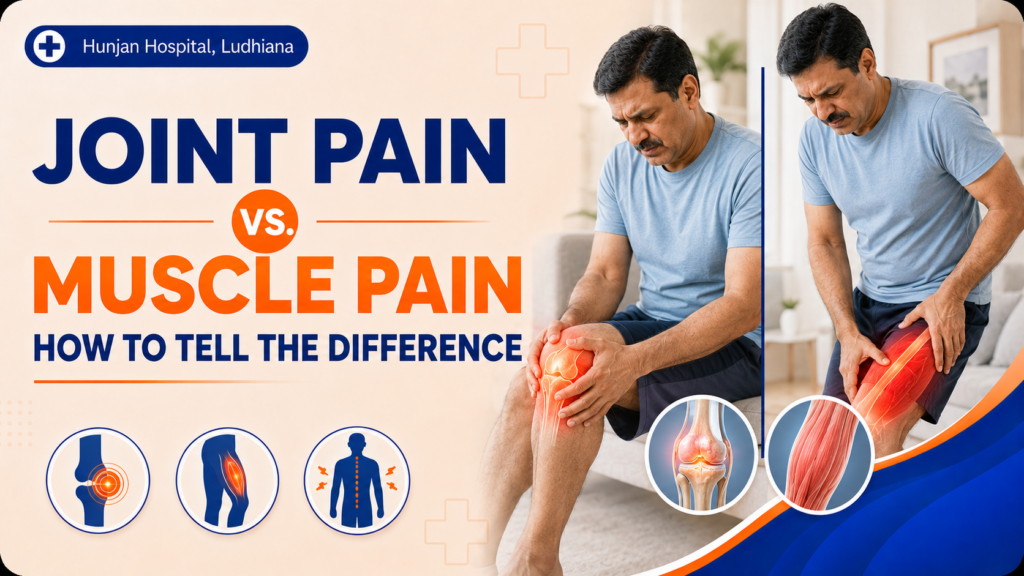
Many people use the words joint pain and muscle pain interchangeably, but they are not the same. Knowing the difference can help you decide whether simple rest may be enough or whether it’s time to seek an orthopedic consultation.
First, Understand the Difference
A joint is where two bones meet, such as the knee, hip, shoulder, ankle or elbow. Around every joint are muscles, tendons, ligaments, cartilage and other soft tissues that help the joint move smoothly.
Because all these structures work together, pain in one area can sometimes feel like it is coming from another. This is one of the biggest reasons people misjudge the cause of their pain.
For example, a person may think they have thigh muscle pain when the problem is actually coming from the hip joint. Likewise, shoulder pain may sometimes begin in the neck rather than the shoulder itself.
How Muscle Pain Usually Feels
Muscle pain often develops after an activity that the body is not used to.
It may happen after:
- Lifting heavy objects
- Starting a new exercise routine
- Gardening or household work
- Long hours of driving
- Sleeping in an awkward position
- Repetitive work movements
People commonly describe muscle pain as:
- A dull ache
- Tightness
- Soreness when touching the muscle
- Pain that becomes noticeable while using that muscle
- Improvement after a few days of rest
One interesting point many people don’t know is that muscle soreness often peaks 24 to 48 hours after activity, not immediately after it. This is called delayed-onset muscle soreness (DOMS) and is a normal response to unfamiliar exercise.
Muscle pain usually improves gradually as the muscle heals.
How Joint Pain Usually Feels
Joint pain is often felt deeper inside the body rather than on the surface.
People may notice:
- Pain while standing up
- Pain during walking
- Difficulty climbing stairs
- Stiffness after sitting
- Reduced movement
- Swelling around the joint
- Clicking or grinding sensations
- Pain even without heavy activity
Unlike muscle soreness, joint pain may continue for weeks or months and may gradually become more frequent.
Here’s Something Most People Don’t Realise
One of the biggest misconceptions is believing that the place where you feel pain is always the place where the problem exists.
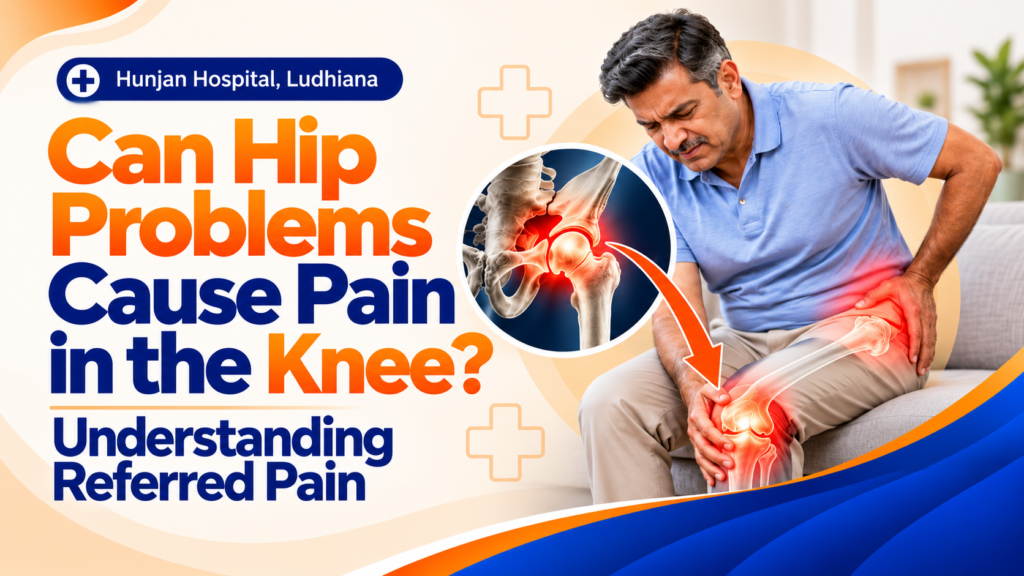
Hip arthritis can feel like knee pain.
Many patients visit an orthopedic clinic complaining only of knee pain. After examination, the actual problem turns out to be the hip joint.
This happens because nerves around the hip can send pain signals toward the knee.
Similarly,
- Neck problems may cause shoulder pain.
- Back problems may cause hip pain.
- Hip problems may cause thigh pain.
- Knee problems may change the way you walk, eventually causing back pain.
This is why self-diagnosis based only on the location of pain can be misleading.
“Does it hurt when I press the area, or does it hurt when I move the joint?”
If pressing on a specific muscle makes the pain worse, it may suggest muscle involvement.
If bending, rotating or putting weight through the joint causes pain, the joint itself may be contributing to the problem.
However, this is only a clue—not a diagnosis. Both muscles and joints can be affected at the same time.
How Pain Behaves Differently
Muscle pain often:
- Improves with a few days of recovery
- Feels better after gentle movement
- Is linked to recent physical activity
- Does not usually cause joint swelling
- Rarely limits joint movement completely
Joint pain often:
- Returns repeatedly
- Feels worse after sitting for long periods
- Causes stiffness in the morning
- Makes everyday movements difficult
- May produce swelling or reduced range of motion
- Can affect walking, balance or grip
The Habit That Can Make Joint Pain Worse
Many people begin protecting the painful area without realizing it.
They stop bending the knee fully.
They avoid using one shoulder.
They shift weight onto the opposite leg.
Initially, this feels helpful. But over time, it may create compensation patterns, where other muscles and joints start doing extra work.
This can lead to:
- Hip pain after knee pain
- Back pain after hip pain
- Shoulder pain after neck pain
- Pain in the opposite knee because it is carrying more weight
Sometimes the new pain becomes more noticeable than the original problem.
Can Weather Tell You Anything?
Many people say their joints hurt more before it rains or during winter.
While weather itself does not damage joints, changes in temperature and atmospheric pressure may make existing joint conditions feel more noticeable in some people.
Interestingly, muscle pain is usually less affected by weather than chronic joint conditions like osteoarthritis.
Don’t Ignore Pain That Changes Your Routine
Pain becomes more concerning when it starts changing how you live.
For example:
- Avoiding stairs
- Taking fewer walks
- Needing support to get up from a chair
- Stopping floor sitting
- Avoiding travel because walking is difficult
- Waking up at night because of pain
- Depending on painkillers more often
These changes often happen gradually, so people adjust without noticing how much their routine has changed.
When Should You Seek an Orthopedic Consultation?
An orthopedic consultation is worth considering if:
- Pain lasts more than a few weeks
- It keeps coming back
- Swelling develops around a joint
- Walking becomes difficult
- One joint feels unstable
- Pain interrupts sleep
- You cannot comfortably perform daily activities
- Pain is spreading because you have started compensating with other parts of the body
- Medicines provide only temporary relief
A consultation does not automatically mean surgery. It simply helps identify the actual cause of the pain and the most appropriate treatment.
Why Getting the Right Diagnosis Matters
Treating muscle pain as arthritis may lead to unnecessary worry.
Treating arthritis as “just a muscle pull” may delay proper care.
Similarly, repeatedly using painkillers without understanding the reason for the pain may only mask symptoms while the underlying condition continues to progress.
The right diagnosis helps determine whether the condition is related to muscles, joints, tendons, ligaments or even another part of the body.
Final Thought
Not every pain means the same thing.
A sore muscle after physical activity usually improves with time, while persistent joint pain often continues to affect movement, confidence and daily life. The challenge is that the body does not always tell you exactly where the problem begins.
If pain keeps returning, changes the way you walk, sleep or carry out everyday activities, it deserves more than temporary relief. A timely orthopedic consultation can help identify the real cause and guide the right treatment before the condition affects your quality of life further.