Recovery Begins After the Surgery, Not When It Ends
Knee and hip replacement surgery can significantly improve mobility and reduce pain caused by advanced joint damage. However, surgery is only one part of the treatment journey. Recovery involves bone preparation, implant placement, healing of surrounding soft tissues and gradual rebuilding of muscle strength, balance and confidence in movement.
A patient may feel relief from the old arthritic pain early, but swelling, stiffness, tiredness and discomfort from the surgical healing process are still expected in the initial weeks. Recovery is gradual and does not follow the same timeline for every person.
What Happens During a Joint Replacement Procedure?
In a knee or hip replacement, the damaged joint surfaces are prepared and replaced with artificial components called implants. The surrounding muscles, ligaments and other soft tissues still need time to settle and adapt to the new joint.
For this reason, recovery is not simply about the incision healing. It also includes restoring joint movement, controlling swelling, rebuilding strength and learning safe movement patterns again. The implant is placed during surgery, but functional recovery is built through rehabilitation afterward.
The First Few Days: Safety, Pain Control and Early Movement
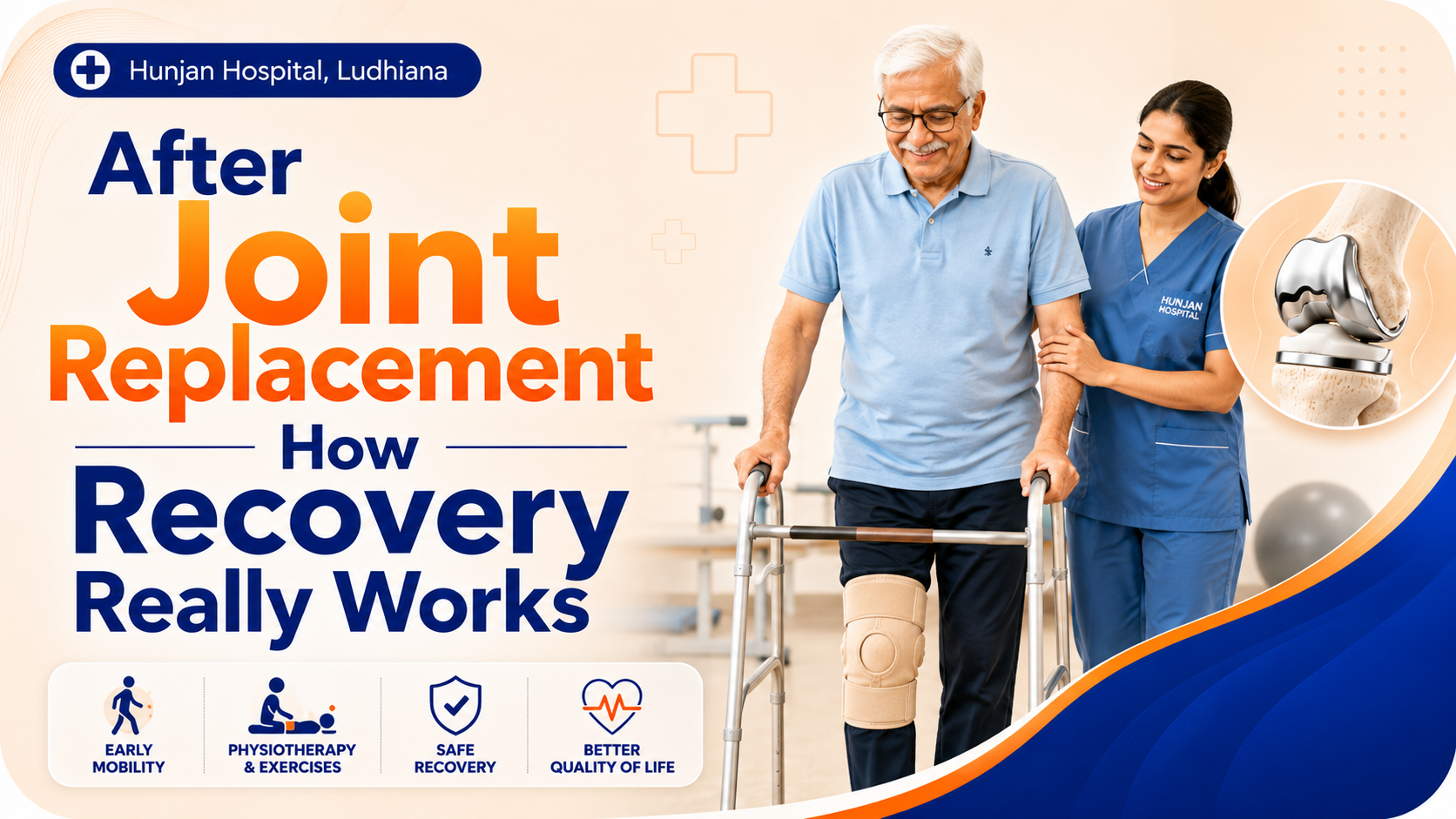
The early stage is focused on safe mobilisation and preventing complications. Depending on the procedure and the patient’s overall condition, many patients begin standing or walking with support under the guidance of the care team.
The initial goals are usually:
- Managing pain in a way that allows safe movement
- Learning how to get in and out of bed or a chair
- Walking with a walker, crutches or another support if advised
- Beginning simple prescribed exercises
- Understanding wound care, medicines and precautions before discharge
- Learning how to use stairs safely if required at home
Before discharge, patients are usually guided on safe movement, use of walking support and the home exercise plan advised by their treating team.
The First Two Weeks: Healing Without Rushing
This phase can feel demanding. The joint may remain swollen and movement may feel slow or uncomfortable. It is common for patients to compare their progress with someone else’s recovery, but this is rarely helpful. Age, pre-surgery strength, other medical conditions, the type of procedure and the ability to follow rehabilitation all influence progress.
During this period, patients are generally guided to focus on:
- Regular physiotherapy exercises as prescribed
- Short, safe walks rather than prolonged activity
- Swelling management through the measures advised by the treating team
- Proper use of walking support
- Taking medicines as prescribed
- Avoiding sudden twisting, falls or unapproved activities
The aim is not to prove strength quickly. The aim is to build a safe base for recovery.
Weeks Three to Six: Regaining Everyday Independence
As pain and swelling gradually reduce, many patients begin becoming more independent with routine tasks. This does not mean recovery is complete. The joint is still healing and the muscles around it may remain weak.
This phase often focuses on:
- Improving knee bend or hip movement as advised
- Moving from a walker to a stick or less support when clinically appropriate
- Improving balance and walking pattern
- Managing stairs with the correct technique
- Returning gradually to light household activities
- Building confidence without overloading the joint
Early recovery after knee replacement often takes several weeks. Further improvement in strength, flexibility and confidence can continue for months.
Why Physiotherapy Is Not an Optional Part of Recovery
A successful operation alone cannot restore normal function without rehabilitation. Physiotherapy helps the body adapt to the new joint and reduces the risk of stiffness, poor walking patterns and prolonged weakness.
A structured programme may include:
- Range-of-motion exercises to restore safe joint movement
- Muscle activation and strengthening exercises
- Walking and balance training
- Guidance for stairs, sitting, standing and transfers
- Gradual endurance building for daily activity
Physiotherapy is not only about exercise. It helps patients move correctly, regain confidence and return to daily activities without placing unnecessary strain on the new joint.
Why One Patient Recovers Faster Than Another
Two people can have the same procedure and still recover differently. A faster timeline is not the only sign of a good outcome. What matters is steady, safe progress.
Recovery may be influenced by:
- Overall health and medical conditions such as diabetes or heart disease
- Muscle strength and mobility before surgery
- Severity of joint damage before treatment
- Surgical technique and implant selection
- Pain control and wound healing
- Consistency with physiotherapy
- Nutrition, sleep and family support at home
- Avoiding falls and following activity precautions
This is why patients should not make decisions based only on another person’s recovery story.
What Is Usually Normal During Recovery?
Some discomfort is expected after a major joint procedure. Patients may notice that recovery is not perfectly linear. A better day may be followed by a day with more swelling after increased activity.
Common experiences can include:
- Swelling around the knee, leg, ankle or foot
- Stiffness after rest or in the morning
- Tiredness after physiotherapy or walking
- Temporary sleep disturbance
- A feeling of tightness around the surgical area
- Gradual improvement rather than instant normal movement
Swelling and stiffness may continue for some time after surgery, but they should gradually improve with appropriate recovery care and follow-up.
Warning Signs That Need Medical Attention
Patients should contact their treating team promptly if they notice symptoms that are worsening rather than gradually improving.
- Fever or chills
- Increasing redness, warmth or discharge from the wound
- Sudden or worsening pain that does not respond to prescribed treatment
- New swelling or pain in the calf
- Shortness of breath or chest pain
- A fall or injury involving the operated joint
- Difficulty moving the leg that is new or severe
These symptoms do not always indicate a serious complication, but they should never be ignored.
Returning to Daily Life: A Gradual Process
Many people want to know exactly when they can drive, return to work, travel or resume household responsibilities. There is no single date that applies to everyone. The answer depends on the joint replaced, the type of work, the operated side, strength, reaction time and the treating surgeon’s advice.
Many patients return to routine daily activities over several weeks. Further gains in strength, flexibility and confidence can continue for months. Low-impact activities such as walking, stationary cycling or swimming may be introduced when the doctor or physiotherapist considers them safe. High-impact activities may not be suitable for every patient and should not be resumed without medical guidance.
How Hunjan Hospital Supports Joint Replacement Recovery
At Hunjan Hospital, joint replacement care is planned as a complete treatment pathway rather than only an operation. The focus is on clinical assessment before surgery, careful surgical planning, realistic guidance after surgery and structured rehabilitation support.
The care pathway may include:
- Orthopedic evaluation and treatment planning
- Guidance on implant selection and procedure suitability
- Surgical care by an experienced orthopedic team
- Post-operative monitoring and pain management
- Physiotherapy and rehabilitation support
- Follow-up guidance for safe return to daily activities
- Cashless insurance facility, subject to policy approval
The goal is to help each patient progress safely, steadily and with realistic expectations.
Final Thought
Joint replacement can be life-changing for the right patient, but recovery deserves the same attention as the operation itself. The best results usually come from a combination of appropriate surgical planning, consistent physiotherapy, safe activity progression and regular follow-up.
Recovery is not a race. It is a structured process of healing, strengthening and returning to movement with confidence.
Medical Disclaimer: The information in this article is for educational purposes only and does not replace professional medical advice, diagnosis, or treatment. Always consult a qualified doctor for medical concerns or treatment decisions. Recovery time and outcomes vary from patient to patient depending on individual health, age, medical conditions, the type of surgery, implant selection, physiotherapy participation and post-operative care.