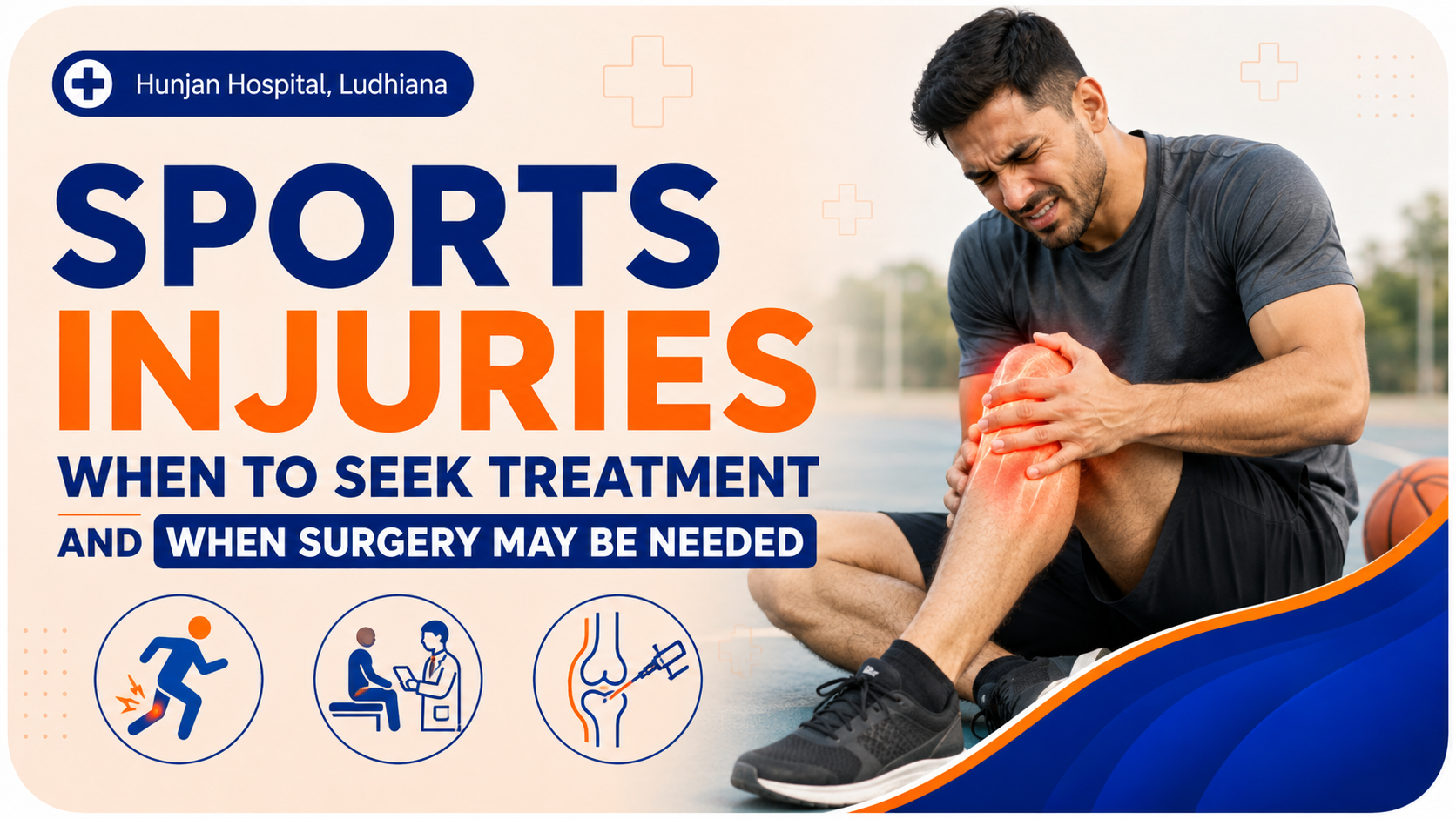
Sports and regular physical activity are important for strength, cardiovascular health, mobility and overall well-being. However, whether someone is a professional athlete, a recreational player or simply exercises to stay fit, injuries can occur.
A sports injury should not automatically be treated as a reason to stop physical activity permanently, nor does every sports injury require surgery. The correct treatment depends on the type of injury, its severity, the structures involved, the athlete’s age and activity level, and their goals for returning to sport.
Understanding these factors can help athletes seek appropriate care without either ignoring a potentially serious injury or assuming that surgery is always necessary.
What Are Sports Injuries?
Sports injuries can affect muscles, tendons, ligaments, bones, joints and cartilage. Some happen suddenly during activity, while others develop gradually because of repeated stress or excessive training.
Common sports-related injuries include:
- Muscle strains
- Ligament sprains
- Ankle injuries
- ACL and other knee ligament injuries
- Meniscus injuries
- Shoulder dislocation or instability
- Rotator cuff injuries
- Tendon injuries
- Stress fractures
- Traumatic fractures
- Cartilage injuries
- Overuse injuries such as tendinopathy
An injury may occur after a fall, collision, sudden twisting movement, awkward landing or rapid change in direction. In other cases, symptoms gradually appear because the tissues are repeatedly exposed to more load than they are currently able to tolerate.
Do Not Ignore Persistent Sports Injury Symptoms
Minor soreness after exercise can occur and does not necessarily indicate a serious injury. Certain symptoms, however, deserve medical assessment.
An athlete should consider an orthopaedic or sports injury evaluation if there is:
- Significant or increasing pain
- Persistent swelling
- Inability to bear weight normally
- Difficulty moving the injured joint
- A joint that repeatedly gives way or feels unstable
- Locking or catching of the knee
- Visible deformity
- Persistent weakness
- Pain that continues or repeatedly returns during activity
- A popping sensation followed by pain, swelling or instability
- Numbness, tingling or changes in sensation after an injury
Severe pain, obvious deformity, inability to use the injured limb, significant loss of sensation or other symptoms suggesting a serious fracture or dislocation require prompt medical attention.
Trying to repeatedly “play through” significant symptoms can sometimes worsen an injury or delay appropriate treatment.
Correct Diagnosis Comes Before Treatment
Two athletes with knee pain may have completely different injuries, which means they may also require completely different treatment.
Assessment generally begins with understanding how the injury occurred, followed by a physical examination to evaluate pain, swelling, range of movement, muscle function and joint stability.
Depending on the suspected injury, investigations may include:
X-rays to assess fractures, joint alignment and certain bone-related conditions.
MRI scans when detailed assessment of structures such as ligaments, menisci, cartilage, muscles or tendons is clinically required.
Other investigations may occasionally be recommended depending on the affected area and suspected condition.
Imaging is therefore not automatically necessary for every minor sports injury. The decision should be based on clinical assessment.
Does Every Sports Injury Need Surgery?
No.
Many sports injuries can be managed without surgery.
Depending on the diagnosis, non-surgical treatment may include:
- Temporary modification of sporting activity
- Appropriate protection of the injured area
- Measures to control pain and swelling
- Physiotherapy
- Progressive strengthening
- Mobility exercises
- Balance and neuromuscular training
- Sport-specific rehabilitation
- Gradual return to activity
The objective is not simply to make the pain disappear. Good rehabilitation aims to restore movement, strength, stability, coordination and the physical capacity required for the athlete’s sport.
Returning too quickly before these qualities have recovered may increase the risk of another injury.
When May Sports Injury Surgery Be Considered?
Surgery is usually considered for specific injuries and circumstances rather than simply because someone plays sport.
The decision should be individualized after proper orthopaedic assessment.
ACL Injuries
The anterior cruciate ligament, or ACL, is an important stabilizing ligament of the knee. ACL injuries frequently occur during sports involving sudden stopping, pivoting, jumping or rapid changes in direction.
Some people with isolated ACL injuries may be managed with structured rehabilitation, particularly when the knee remains functionally stable and their activities do not require repeated cutting and pivoting.
ACL reconstruction may be considered when factors such as the following are present:
- Recurrent knee instability
- Desire to return to high-demand pivoting or cutting sports
- Associated meniscus or other ligament injuries
- Functional instability affecting normal activities
The decision should therefore consider both the injury and the athlete’s future activity requirements.
Meniscus Injuries
The meniscus is cartilage within the knee that contributes to load distribution and joint stability.
Not every meniscus tear requires surgery. Physiotherapy and activity modification may be appropriate for certain injuries.
Surgical treatment may be considered in selected cases, particularly when symptoms persist despite appropriate rehabilitation or when an injury produces significant mechanical symptoms such as locking.
When clinically appropriate, preservation and repair of meniscal tissue may be considered rather than unnecessary removal.
Tendon and Other Ligament Injuries
Some significant tendon ruptures, unstable ligament injuries or combined injuries may require surgical repair or reconstruction, particularly when normal function cannot be restored adequately through non-operative treatment.
The treatment decision depends on the tendon or ligament involved, the extent of damage, the patient’s age, functional requirements and sporting goals.
Fractures
Many fractures can be treated without surgery when the bones remain appropriately aligned and stable.
Surgery may be required when a fracture is displaced, unstable, involves a joint surface or cannot be maintained in an acceptable position through conservative treatment.
Again, the X-ray alone does not determine every treatment decision; the complete clinical situation must be considered.
Surgery Is Only One Part of Recovery
For athletes who do require surgery, the operation should not be viewed as the entire treatment.
Rehabilitation before and after surgery can be extremely important.
Depending on the injury and operation, rehabilitation may focus on:
- Controlling pain and swelling
- Restoring joint movement
- Recovering muscle strength
- Improving balance and coordination
- Rebuilding cardiovascular fitness
- Progressive running and jumping
- Change-of-direction training
- Sport-specific drills
The time required for recovery differs substantially between injuries and between individuals.
Returning to sport should therefore not be decided only because a particular number of weeks or months has passed.
A clinician or rehabilitation team may assess factors such as strength, range of motion, joint stability, functional testing, sport-specific performance and the athlete’s confidence before recommending unrestricted return to sport.
Preventing Sports Injuries
Not every injury is preventable, but sensible training practices can reduce avoidable risk.
Warm Up Properly
A structured warm-up progressively prepares the muscles, joints and cardiovascular system for higher-intensity activity.
For sports involving jumping, landing and rapid direction changes, neuromuscular training programmes that include strength, balance and movement technique can also be valuable. Proper training programmes have been shown to help reduce the risk of certain ACL injuries.
Increase Training Gradually
Sudden increases in running distance, training intensity, gym load or number of sessions can place more stress on tissues than they are prepared to tolerate.
Training should generally progress gradually while allowing adequate recovery.
Build Strength
Strong muscles help control movement and support joints.
Training should not focus only on the muscles that are most visible. Depending on the sport, appropriate programmes may include the core, hips, gluteal muscles, quadriceps, hamstrings, calves and upper-body stabilizing muscles.
Learn Correct Technique
Poor landing, cutting, lifting or throwing mechanics may contribute to injury risk.
Coaching and physiotherapy can help athletes identify and improve movement patterns relevant to their sport.
Use Appropriate Equipment
Sport-appropriate footwear and properly maintained protective equipment should be used where relevant.
Equipment alone, however, cannot compensate for poor conditioning, excessive training or unsafe technique.
Sports Health Goes Beyond Injury Treatment
Athletic performance and injury recovery depend on overall health.
Athletes should give appropriate attention to:
Nutrition: Adequate energy, protein and a balanced diet support training and tissue recovery.
Hydration: Fluid requirements vary with exercise intensity, duration, weather and individual sweat loss.
Sleep and recovery: Training adaptations occur during recovery as well as during exercise. Repeatedly training while significantly fatigued can negatively affect performance and movement quality.
Rest days: More training does not automatically mean better performance. Recovery should be incorporated into an appropriate training programme.
Avoiding unsupervised performance-enhancing substances: Anabolic steroids and other unprescribed performance-enhancing drugs can carry significant health risks. Athletes should not use medicines, hormones or supplements as a substitute for appropriate training, nutrition and medical guidance.
Pain-Free Does Not Always Mean Ready to Play
One of the most common mistakes after a sports injury is returning to competition as soon as pain decreases.
Pain is only one component of recovery.
Before returning to demanding sport, an athlete may also need to recover:
- Full or appropriate range of movement
- Adequate strength
- Joint stability
- Balance and coordination
- Speed and power
- Sport-specific movement ability
- Confidence in the injured limb
A structured and progressive return to sport can be safer than immediately returning to full competition.
The Aim Is a Safe Return to Activity
Sports injury treatment should not be based on a single approach for every patient.
Some athletes may recover with activity modification and rehabilitation. Others may benefit from surgery followed by structured rehabilitation. The appropriate treatment can only be determined after understanding the injury, the patient’s functional needs and their sporting goals.
At Hunjan Hospital, Ludhiana, patients with sports-related musculoskeletal injuries can consult the orthopaedic team for clinical assessment, diagnosis and an individualized treatment plan. Where appropriate, treatment may include non-surgical management, rehabilitation or surgical options based on the nature and severity of the injury.
The objective should always be the same: protect long-term joint and musculoskeletal health while helping the individual return to activity as safely as reasonably possible.
Medical Disclaimer
This article is intended for general health education and does not replace individual medical advice, examination or diagnosis. Sports injuries and treatment requirements vary between patients. Surgical and non-surgical treatment should be decided after assessment by an appropriately qualified healthcare professional.