What is PRP Therapy?
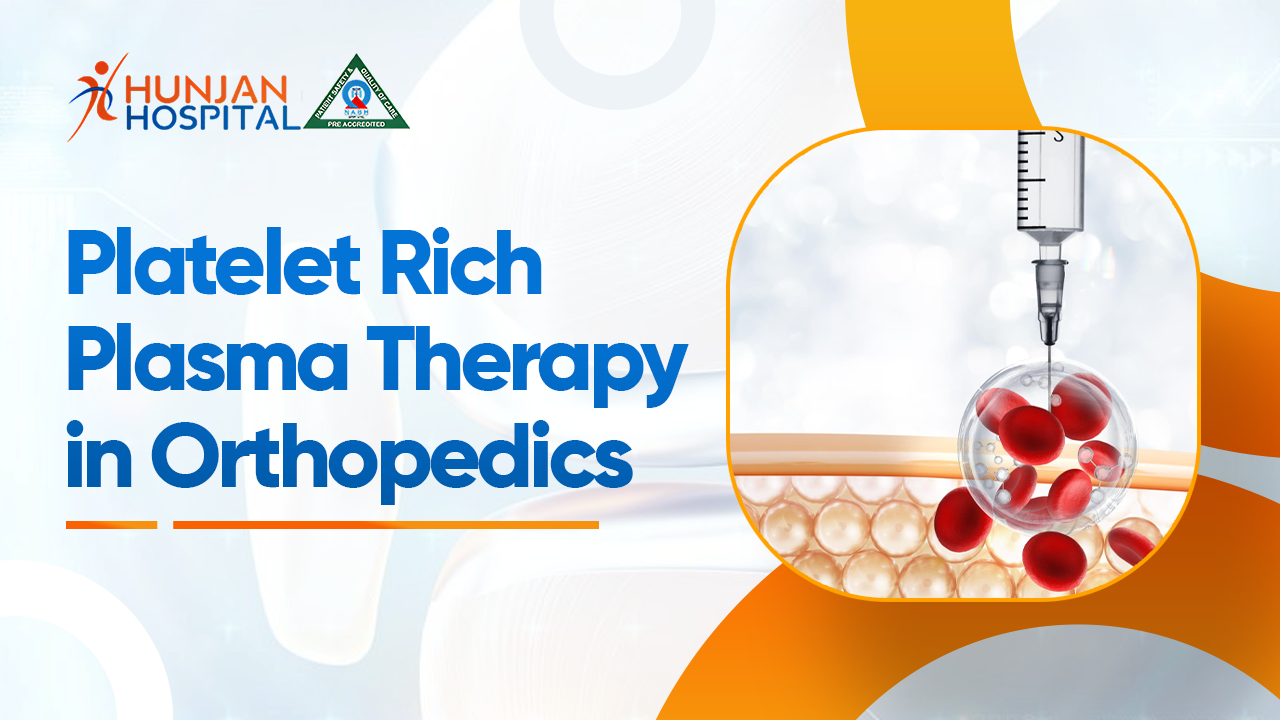
Platelet-Rich Plasma or PRP therapy is a treatment where a concentrated form of your own blood is prepared and injected into a specific area of the body to support healing. In orthopedic care, PRP is used as an injection-based treatment to manage joint pain, tendon injuries and early degenerative conditions.
Instead of only controlling symptoms, PRP focuses on improving the healing environment inside the joint. Platelets contain growth factors that play a role in tissue repair. When these are concentrated and injected into the affected area, they help reduce inflammation and support recovery at a cellular level.
It is important to understand that PRP is not a replacement for damaged structures. It is used to improve how the existing joint or tissue functions and responds to stress over time.
Where is it used?
PRP therapy is usually considered in conditions where the tissue is damaged but still has the potential to recover with support.
- Early knee arthritis where there is pain with initial cartilage wear
- Cartilage injuries caused by degeneration or minor trauma
- Tendon-related conditions such as tennis elbow or jumper’s knee
- Shoulder pain related to rotator cuff irritation or overuse
- Ligament strain or partial injuries in active individuals
- Chronic joint pain that is not improving with rest or physiotherapy
It is generally more effective in early to moderate stages where the joint structure is still preserved and responsive to treatment.
How does it work?
PRP therapy is a step-by-step medical process that uses the patient’s own blood to create a concentrated healing solution.
- A small sample of blood is drawn from the patient similar to a routine blood test
- The sample is placed in a centrifuge machine that spins at a controlled speed to separate its components
- Platelets are isolated and concentrated into a small volume of plasma
- This platelet-rich plasma is then injected into the affected joint or tissue under sterile conditions
- In some cases imaging guidance such as ultrasound is used to ensure accurate placement
- Once injected the platelets release growth factors that help reduce inflammation and support tissue repair
The effect is gradual. The body responds over time and improvement is usually seen over a few weeks rather than immediately after the injection.
What are the benefits?
PRP is considered in orthopedic care because it offers a supportive treatment without major intervention.
- It is a minimally invasive procedure performed as an injection without surgery
- Uses the patient’s own blood which reduces the risk of allergic reactions or rejection
- Targets the affected area directly instead of affecting the whole body
- Helps reduce pain and improve joint movement in selected cases
- Can support healing in tissues that are slow to recover
- May delay the need for surgery in early-stage conditions
The benefit is not just temporary relief but a gradual improvement in how the joint functions in daily life.
Who can consider this treatment?
PRP therapy is usually considered for patients who have persistent joint or tendon-related pain that is not improving with basic treatment such as medication or physiotherapy. It is often suitable for individuals in early to moderate stages of joint degeneration where the damage is present but not severe.
It may also be considered for active individuals who want to return to activity while avoiding more invasive procedures. However, in advanced arthritis where the joint is significantly worn out or in cases of complete structural damage, PRP alone is usually not sufficient.
A proper clinical examination and imaging assessment are important to decide whether this treatment is appropriate.
What people often misunderstand
- PRP is often seen as a quick solution but the results develop gradually
- It does not regenerate a completely new joint or reverse severe damage
- It is not a substitute for surgery in advanced stages
- Not all types of joint pain respond equally to PRP
- The number of injections and response can vary from patient to patient
Understanding these points helps patients approach the treatment with realistic expectations.
What to expect after the procedure
- Mild pain or soreness may be felt at the injection site for a short period
- Strenuous activity is usually avoided for a few days
- Improvement may begin gradually over a few weeks
- Some patients may require more than one session depending on the condition
- Physiotherapy or guided exercises may be recommended to support recovery
- Regular follow-up helps assess progress and response
Recovery is generally smooth and does not involve long downtime.
How is PRP different from other injections?
PRP is given as an injection similar to other orthopedic injections but the purpose and effect are different. Most commonly used injections such as steroids are designed to reduce inflammation quickly and provide short-term relief. PRP on the other hand focuses on supporting the body’s healing response over time.
- Steroid injections act quickly but their effect may be temporary
- PRP works slowly but aims to improve tissue health
- Steroids mainly control symptoms
- PRP supports repair and long-term function in suitable cases
Because of this difference PRP is often considered when the goal is not just relief but improvement in the condition itself.
When should PRP be considered seriously?
PRP becomes a practical option when symptoms persist despite basic treatment and the condition is still in a stage where healing is possible.
- Pain continues even after medication and physiotherapy
- Daily activities are affected but surgery is not immediately required
- Imaging shows early or moderate joint changes
- The goal is to delay progression and maintain joint function
Early decision-making in such cases can improve overall outcomes.
Final thought
PRP therapy is not about choosing a new or advanced option without reason. It is about selecting a treatment that supports healing at the right stage of the condition. In carefully selected patients it can help improve movement reduce discomfort and maintain joint function over time.
The effectiveness of PRP depends on proper evaluation correct technique and realistic expectations.
Medical Disclaimer: The information in this article is for educational purposes only and does not replace professional medical advice, diagnosis, or treatment. Always consult a qualified doctor for medical concerns or treatment decisions. Outcomes may vary from patient to patient.