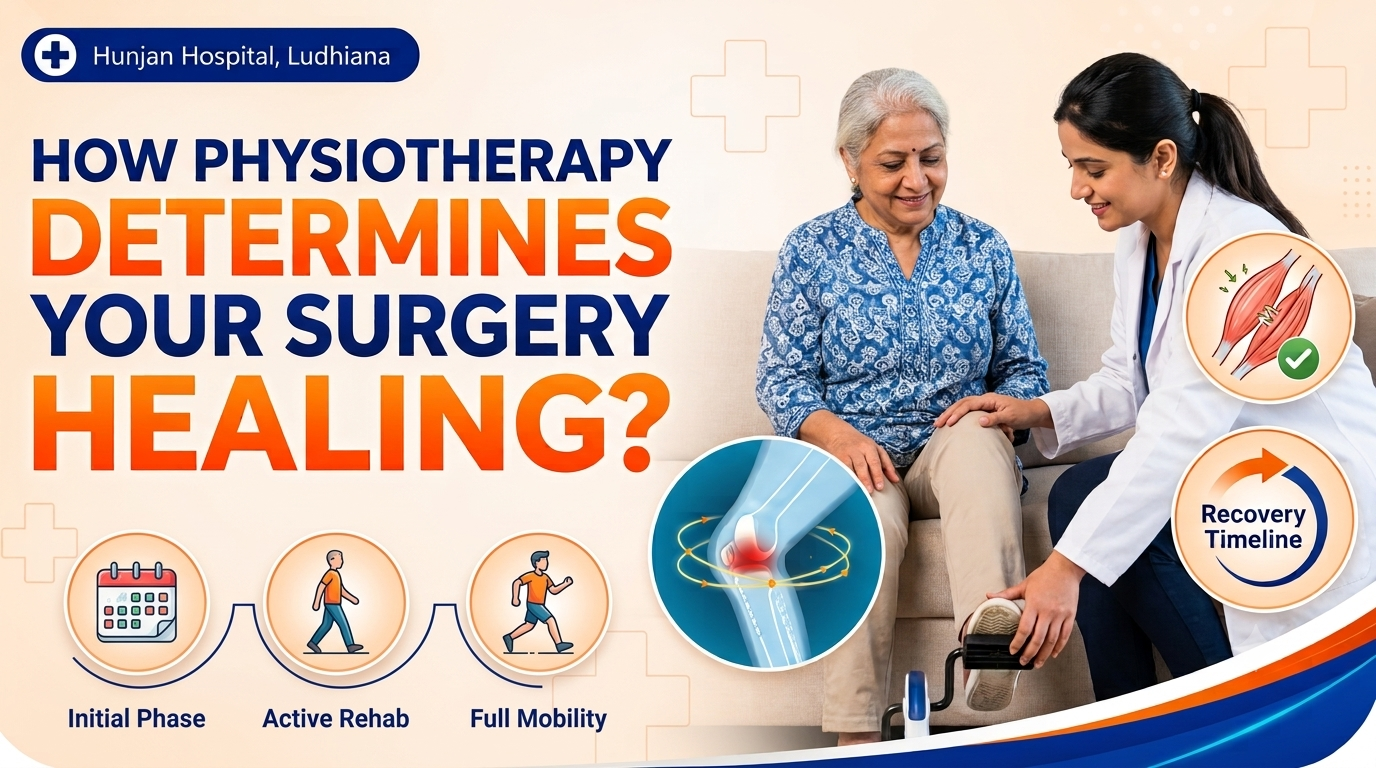
Surgery Repairs the Problem, Physiotherapy Restores the Function
A successful surgery is not only judged by what happens inside the operation theatre. Whether it is knee replacement, hip replacement, fracture fixation, ligament repair or spine surgery, the body still needs to regain movement, strength, balance and confidence afterward. This is where physiotherapy becomes an essential part of recovery.
Surgery may correct a damaged joint, repair a bone or stabilise an injury, but it does not automatically restore the way a person walks, climbs stairs, bends, stands or performs daily activities. Physiotherapy helps the body adapt to the surgical repair in a safe and structured way.
Why the Body Feels Weak After Surgery
After surgery, the body naturally protects the operated area. Pain, swelling, fear of movement and time spent resting can make muscles weaker very quickly. Even when the surgery has gone well, the patient may feel stiff, unstable or hesitant while moving.
This does not always mean something is wrong. It is often part of the recovery process. However, if movement is delayed for too long or exercises are not followed properly, stiffness and weakness can become more difficult to improve later.
What Physiotherapy Actually Does After Surgery
Physiotherapy is not simply a few exercises given after discharge. It is a planned rehabilitation process based on the type of surgery, healing stage and individual condition of the patient.
A physiotherapist helps patients gradually improve:
- Joint movement and flexibility
- Muscle strength around the operated area
- Balance and stability
- Walking pattern and posture
- Ability to sit, stand and use stairs safely
- Confidence in using the operated limb
- Endurance for daily activities
The programme is adjusted as recovery progresses. What is safe in the first week may be different from what is appropriate after six weeks.
The First Goal Is Not Strength, It Is Safe Movement
Many patients think physiotherapy begins only when they feel strong enough to exercise. In reality, early rehabilitation often begins with simple movements that help prevent stiffness, improve circulation and prepare the body for recovery.
In the initial stage, physiotherapy may focus on:
- Safe bed movement and changing position
- Breathing and circulation exercises
- Gentle muscle activation
- Learning how to stand with support
- Walking with a walker, crutches or stick if advised
- Correct use of stairs and sitting positions
- Basic exercises to maintain joint movement
The purpose is not to push the body too hard. It is to prevent unnecessary loss of movement and strength while the surgical area heals.
Why Skipping Exercises Can Affect Recovery
Patients may skip physiotherapy because of pain, tiredness, fear or the belief that walking around the house is enough. While rest is important, prolonged inactivity can make recovery slower and more difficult.
Without regular rehabilitation, patients may experience:
- Persistent stiffness
- Weak muscles around the joint
- Difficulty walking without support
- Poor balance and higher risk of falls
- Fear of bending or using the operated limb
- Reduced ability to climb stairs or return to routine tasks
- Longer dependence on family members
The body learns movement through repetition. If it is not guided to move correctly, it may develop compensations that place stress on other joints or the back.
Pain During Physiotherapy: What Is Expected and What Is Not
Some discomfort during rehabilitation can be expected, especially in the early phase. Muscles that have been weak or inactive may feel sore when they start working again. Mild stretching discomfort, tiredness after exercise and temporary swelling after increased activity can also occur.
However, severe pain, sudden swelling, new weakness, wound-related concerns or pain that keeps worsening should be discussed with the treating doctor or physiotherapist. Patients should not force exercises through severe pain or copy exercises from online videos without guidance.
Why Recovery Timelines Are Different for Everyone
Two patients may undergo the same surgery but recover at different speeds. This is normal. Recovery depends on more than the procedure itself.
Important factors include:
- Age and overall health
- Diabetes, heart conditions or other medical concerns
- Strength and mobility before surgery
- Severity of injury or joint damage
- Type of surgery and surgical technique
- Pain control and wound healing
- Regularity of physiotherapy
- Nutrition, sleep and emotional support
- Home environment and ability to move safely
A slower recovery does not always mean a poor result. The focus should be on steady improvement, not comparison with another patient.
Physiotherapy Helps Patients Return to Real Life
The goal of rehabilitation is not only to improve movement inside a clinic. It is to help patients return to the activities that matter in daily life.
For one person, this may mean walking comfortably to the market. For another, it may mean using stairs without fear, returning to work, sitting for longer periods or being able to care for family members independently.
Physiotherapy connects the surgical result with practical life. It helps patients move in a way that is safer, stronger and more confident.
Common Mistakes Patients Make During Recovery
Recovery can be affected by small decisions made at home. Patients often do not realise that both underdoing and overdoing activity can create problems.
Common mistakes include:
- Staying in bed for too long because of fear of pain
- Skipping exercises when symptoms improve
- Trying to walk without support before it is advised
- Doing too much activity on a good day
- Ignoring swelling after overexertion
- Missing follow-up appointments
- Following unverified exercise videos online
- Stopping physiotherapy before strength and balance return
The safest approach is to follow a rehabilitation plan that is adjusted according to the patient’s progress.
Physiotherapy After Joint Replacement Surgery
After knee or hip replacement, physiotherapy plays a major role in helping the new joint function well. The implant may be placed accurately during surgery, but the surrounding muscles, ligaments and movement pattern still need time to adapt.
Rehabilitation after joint replacement often focuses on:
- Reducing stiffness and swelling
- Improving knee bend or hip movement as advised
- Strengthening thigh, hip and core muscles
- Improving walking pattern
- Practising stairs and daily transfers
- Building endurance for routine activities
- Reducing dependence on walking support gradually
The best outcomes usually come when surgery, follow-up care and rehabilitation are treated as one complete process.
Physiotherapy Support at Hunjan Hospital
At Hunjan Hospital, physiotherapy is considered an important part of orthopedic recovery, not an afterthought. The rehabilitation plan is guided according to the patient’s procedure, mobility level and healing progress.
The approach may include:
- Post-operative movement assessment
- Guided exercises based on recovery stage
- Walking and balance training
- Joint mobility and muscle strengthening
- Advice for safe movement at home
- Support for recovery after knee, hip and other orthopedic surgeries
- Follow-up guidance to help patients return to daily activities gradually
The aim is to help patients recover with realistic expectations, safe progress and long-term functional improvement.
Final Thought
Surgery can correct the structural problem, but physiotherapy helps the patient use that correction in everyday life. It is the bridge between a successful procedure and a successful recovery.
The best recovery is not about rushing to walk normally in a few days. It is about healing steadily, rebuilding strength and returning to daily life with confidence.
Medical Disclaimer: The information in this article is for educational purposes only and does not replace professional medical advice, diagnosis, or treatment. Always consult a qualified doctor for medical concerns or treatment decisions. Recovery time and outcomes vary from patient to patient depending on individual health, age, medical conditions, type of surgery, physiotherapy participation and post-operative care.