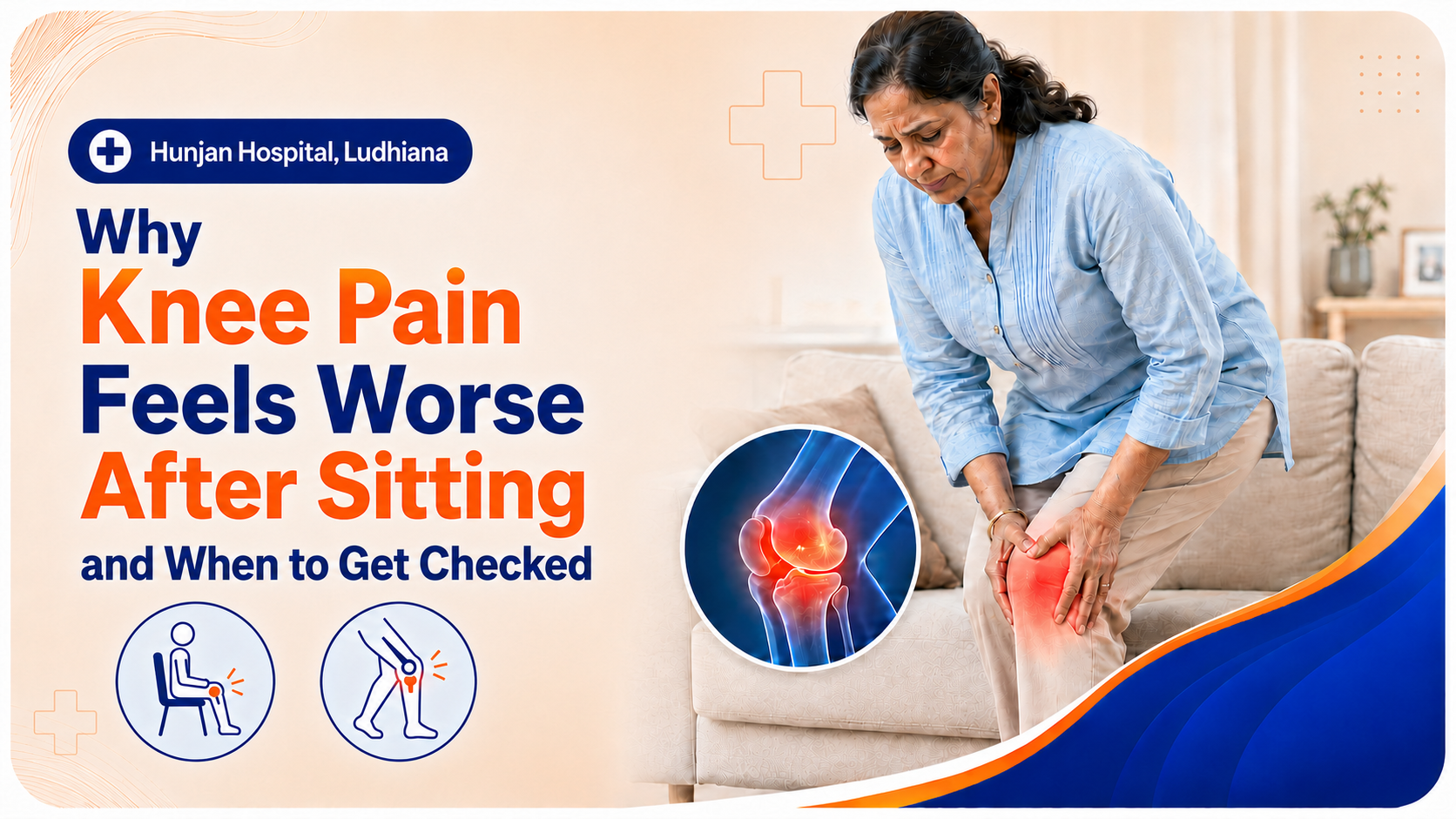
You sit through a meeting, watch television, travel in the car or rest after a long day. But when it is time to stand up, the first few steps can feel difficult. The knee may feel stiff, painful or as if it needs time to “start moving” again.
Many people dismiss this as a normal part of ageing or temporary weakness. However, when knee pain repeatedly feels worse after sitting, it can be a sign that the knee joint, surrounding muscles or movement pattern needs attention.
The “First Few Steps” Problem
A common complaint is: “Once I start walking, it gets a little better.” The discomfort is often strongest after sitting for a long time, getting out of bed in the morning or standing up after travelling.
This happens because the knee remains in one position during sitting. The joint does not move through its normal range, the muscles around it become less active and stiffness can become more noticeable. When you stand, the knee suddenly has to take body weight again.
For some people, this lasts only a few steps. For others, it affects getting up from the sofa, using the washroom at night, leaving the car or standing after prayer.
Why Sitting Can Make Knee Pain More Noticeable
The knee is not only a hinge joint. It works with the thigh muscles, kneecap, ligaments, cartilage and surrounding tissues. When any of these structures are irritated or weak, sitting for a long time can make discomfort more obvious.
Common reasons include:
- Knee osteoarthritis: Wear and tear in the joint can cause stiffness, pain and reduced smooth movement, especially after rest.
- Weak thigh muscles: The muscles around the knee help support body weight. When they are weak, standing after sitting may feel more difficult.
- Kneecap-related pain: Pain at the front of the knee may become noticeable after sitting with bent knees for a long time.
- Joint inflammation: Swelling or irritation inside the knee can make it feel tight and stiff after inactivity.
- Previous injury: An old ligament injury, fracture or meniscus problem can affect how the knee handles pressure over time.
- Reduced movement during the day: Long hours of sitting can reduce flexibility and make stiffness more noticeable when you stand.
The same symptom can have different causes. That is why repeated pain should not be self-diagnosed only through online information.
Everyday Situations That Can Become Difficult
Knee pain after sitting often starts with small adjustments that people do not notice immediately. You may begin pushing yourself up from the chair using your hands. You may choose a chair instead of sitting on the floor. You may take a moment before walking after getting out of the car.
Over time, people may also start avoiding:
- Long car journeys
- Sitting through family functions
- Low sofas or floor seating
- Stairs after resting
- Getting up quickly at night
- Long office hours without movement
- Market visits or walks that require frequent sitting and standing
These changes may seem manageable at first, but they can gradually reduce confidence in movement and make the muscles around the knee weaker.
Is It Always Arthritis?
No. Knee pain after sitting does not automatically mean arthritis or that surgery is needed.
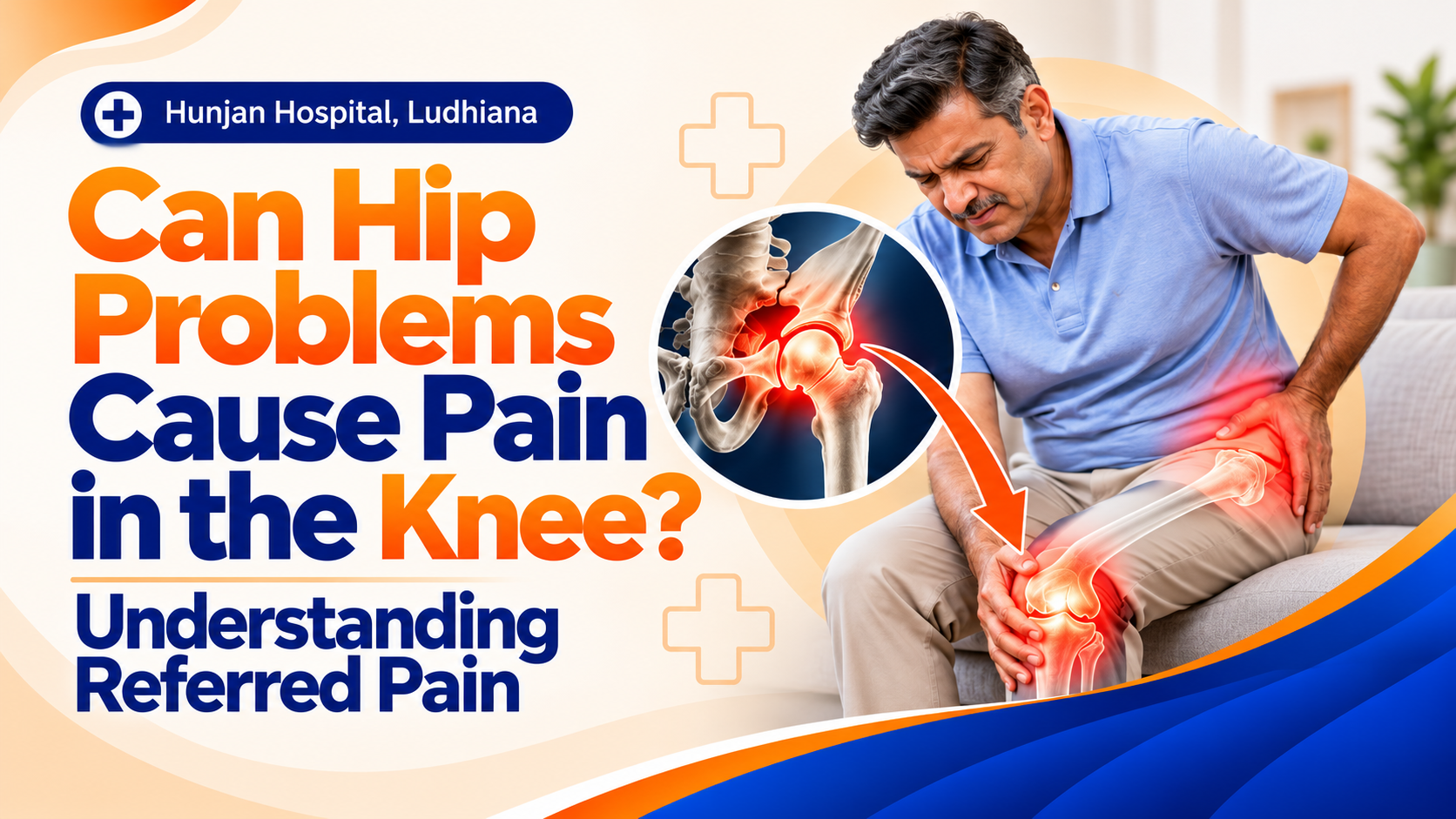
It may be related to muscle weakness, kneecap irritation, an old injury, weight-related stress on the joint, poor movement habits or inflammation. In some cases, pain may also be referred from the hip or lower back.
The important question is not only, “Does my knee hurt?” It is also, “How often does it happen, what activities trigger it and is it changing my daily life?”
When Should You Seek an Orthopedic Consultation?
An occasional mild ache after sitting may improve with rest, gentle movement and appropriate activity changes. But an orthopedic consultation is advisable if the pain is becoming frequent, worsening or affecting routine activities.
Consider getting checked if you notice:
- Pain or stiffness after sitting that happens regularly
- Difficulty getting up from a chair, bed or car
- Pain while walking, climbing stairs or standing for long periods
- Swelling around the knee
- A feeling that the knee may give way
- Reduced ability to bend or straighten the knee
- Pain that affects sleep or daily work
- Increasing dependence on support while walking
An evaluation may include understanding your symptoms, checking knee movement and strength and recommending tests only when clinically needed.
What Can Help Before Your Consultation?
Small changes can sometimes reduce stiffness, but they should not replace a medical evaluation when symptoms are persistent.
You may find it helpful to:
- Avoid sitting in the same position for very long periods
- Stand and move gently at regular intervals
- Use a chair with proper support rather than very low seating
- Avoid sudden twisting movements
- Wear stable footwear
- Follow only doctor- or physiotherapist-advised exercises
- Avoid repeatedly taking painkillers without medical guidance
Do not force deep bends, heavy exercise or stretches that increase pain significantly.
Treatment Depends on the Cause
The right treatment depends on what is causing the knee pain and how much it is affecting your movement. Many patients may benefit from physiotherapy, strengthening exercises, activity modification, weight management guidance or medicines prescribed by a doctor.
For advanced joint damage, persistent pain and significant difficulty in daily activities, joint replacement may be considered for suitable patients after a detailed orthopedic assessment. It is not the first answer for every knee problem.
Joint Replacement Mega Camp at Hunjan Hospital
At Hunjan Hospital’s Joint Replacement Mega Camp, patients with ongoing knee or hip pain can come for an orthopedic consultation, discuss their symptoms and receive guidance on the suitable next step for their condition.
The focus is on understanding the problem before deciding treatment. For suitable patients, knee and hip replacement surgery is starting from ₹90,000*. Cashless facility is available, subject to insurance approval.
Hunjan Hospital brings over 40 years of orthopaedic experience, 23,000+ joint replacements, experienced doctors and physiotherapy support to help patients through their treatment and recovery journey.
Final Thought
Pain after sitting is not always a serious condition, but it should not become something you simply adjust your life around. When getting up from a chair, car or bed repeatedly feels difficult, it may be your body’s way of asking for attention.
A timely orthopedic consultation can help you understand the cause, protect your movement and make informed decisions about treatment.
Medical Disclaimer: The information in this article is for educational purposes only and does not replace professional medical advice, diagnosis, or treatment. Always consult a qualified doctor for medical concerns or treatment decisions. Treatment suitability, recovery time and outcomes vary from patient to patient depending on individual health, age, medical conditions, diagnosis and rehabilitation participation.